-
Orissa
Wood with traces of polychroming
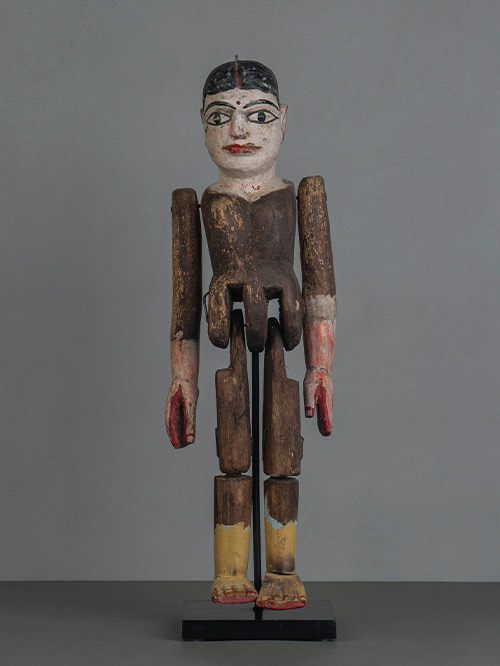
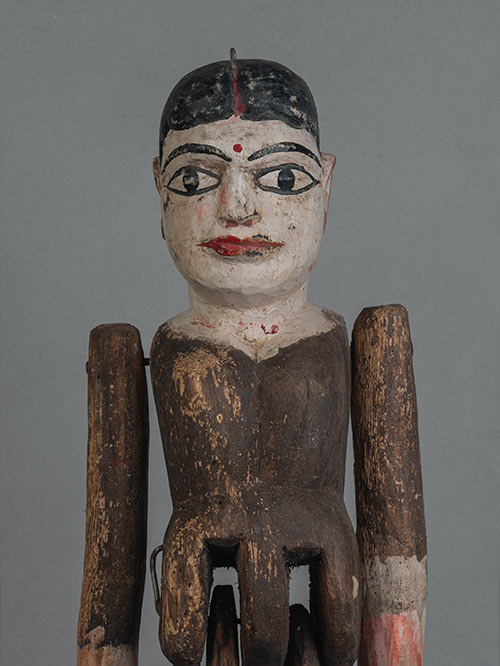
An articulated wooden puppet from Orissa in the style of Kundhei. This art is performed by puppeteers in groups that travel from village to village performing shows. Kundhei is considered as a dying art form as performers turn to more sustainable forms of income. The costumes of Kundhei resemble those worn by actors of the Jatra traditional theatre.
Puppetry in India can be traced back as early as the Indus Valley civilisation, and has always had a vibrant and ancient tradition of using string puppets or marionettes. String puppets were traditionally made of wood, or wire, or cloth stuffed with cotton, rags or saw dust. Themes for puppet theatre are mostly based on epics like the Ramayana and Mahabharata but also include local myths and legends. Puppetry is popular in various state, and each state has slightly varies styles and themes.
Size (cms): 60(H) x 17(W) x 15(D)
Size (inches): 23.5(H) x 6.5(W) x 6(D)
-


Santhal
Wood with cloth
This rare primitive folk puppet consists of a row of ten conjoined men with articulated arms, representing a group of dancers. This puppet would have been part of a set of puppets which is peculiar to the Santhal, known as Chadar Badar. It is quite different from the string, rod, gloves and shadow puppetry that are popular elsewhere in India.
Chadar Badar is a traditional Santhal puppetry featuring 11–17 wooden puppets crafted from simple materials and adorned with vibrant decorations. The rotating platform stage, operated by foot-tugged cords and hand-turned mechanisms, creates a lively performance mimicking Santhal dances. Popular during Durga Puja in Bihar and West Bengal, it includes singing, drumming, and storytelling. The Santhals, known for their rich music and dance traditions, are the largest tribal community in eastern India, drawing widespread cultural and scholarly interest.
Size (cms): 19(H) x 45(W) x 10(D)
Size (inches): 7.5(H) x 17.5(W) x 4(D)
-
Goa (Indo-Portuguese)
Polychromed wood
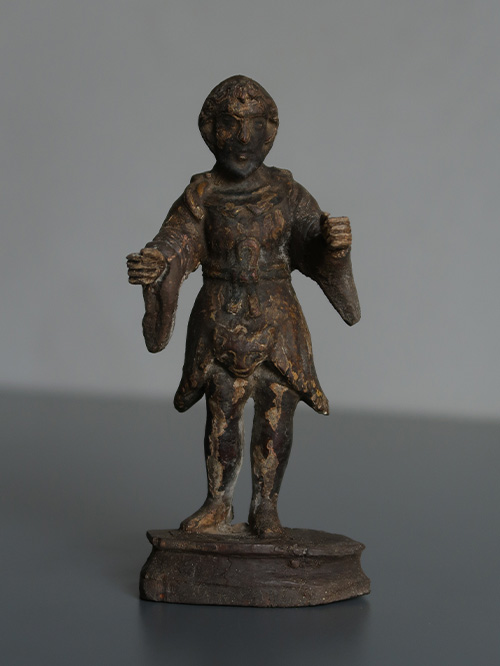
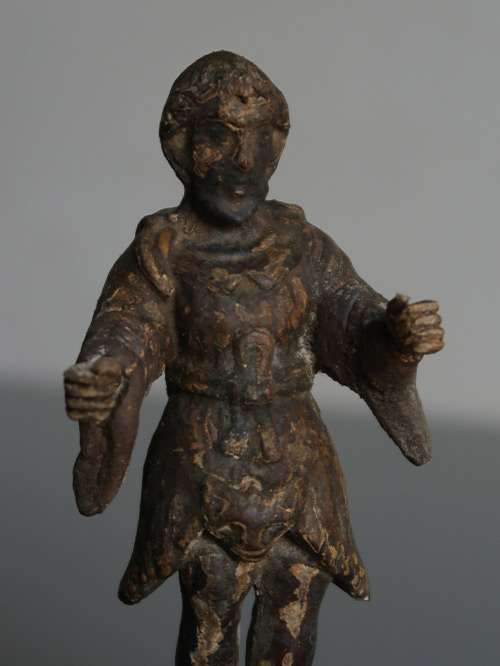
A decorative in the round wood sculpture of Saint John the Baptist standing on a shallow base. John, a shepherd and ascetic, roaming the desert converting Jews in Roman times, is depicted as an ascetic. His face, “wild” hair and long beard, convey a strong determination and sense of purpose, as befits this roaming ascetic, precursor of Jesus, the Saviour. John is the Baptist in the Christian faith as he baptised Christ in the banks of the river Jordan.
Small religious sculptures such as the present one were instrumental in the didactic role of the church. As many local converts were illiterate, religious iconography was important in conveying doctrine and meaning. The present Saint Peter was most likely sculpted by an indigenous artist working under commission from the church authorities or from a local patron motivated by devout feelings.
Size (cms): 14(H) x 6(W) x 3.5(D)
Size (inches): 5.5(H) x 2.5(W) x 1.5(D)
-
Goa (Indo-Portuguese)
Polychromed wood
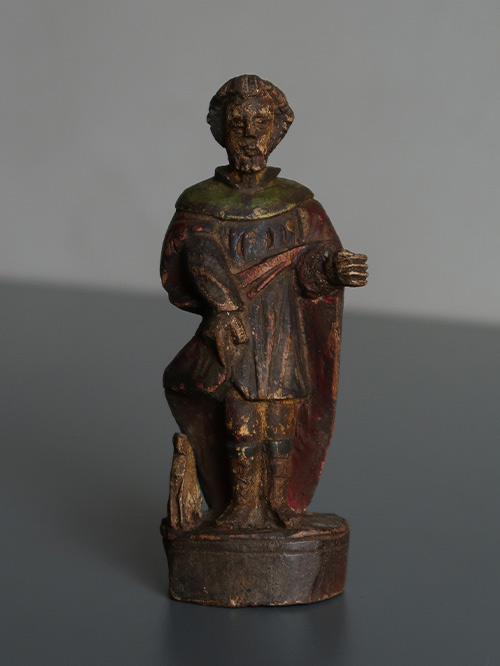
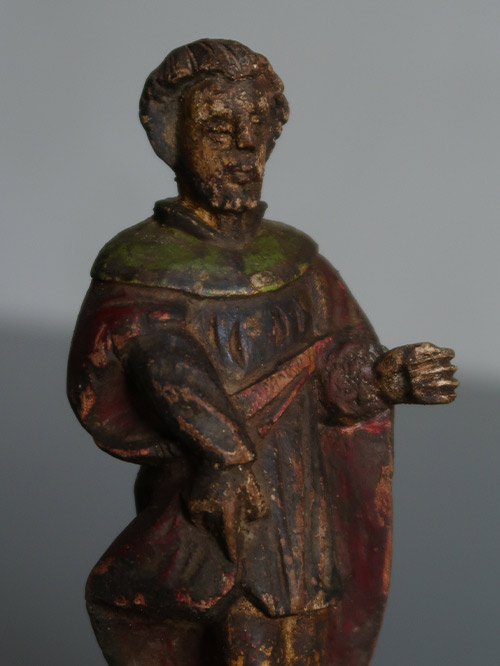
A decorative in the round wood sculpture of Saint Joseph standing on a raised base. Dressed in a tunic and a mantle with accentuated and dynamic pleating, his face is inexpressive and distant, which bestows a certain majesty to the figure. His left hand would have held a stick, which is lacking. Saint Joseph was a Jewish man who according to the canonical Gospels married to Mary, the mother of Jesus. In Catholic traditions, Joseph is regarded as the patron saint of workers and is associated with various feast days.
Small religious sculptures such as the present one were instrumental in the didactic role of the church. As many local converts were illiterate, religious iconography was important in conveying doctrine and meaning. The present Saint Peter was most likely sculpted by an indigenous artist working under commission from the church authorities or from a local patron motivated by devout feelings.
Size (cms): 14.3(H) x 5(W) x 3.5(D)
Size (inches): 5.5(H) x 2(W) x 1.5(D)
-
Goa (Indo-Portuguese)
Polychromed wood
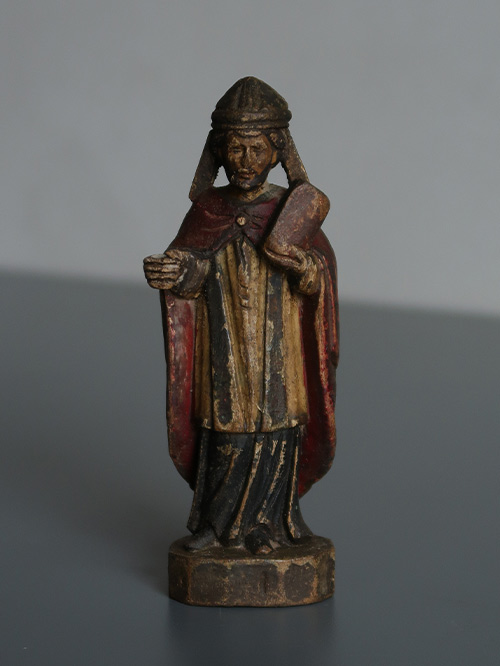
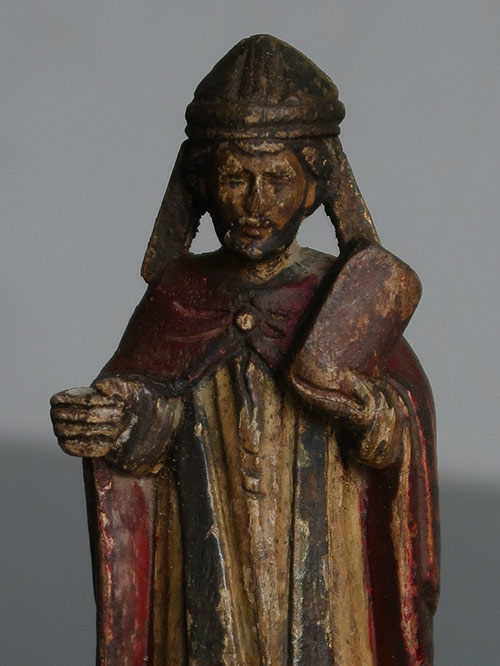
A decorative in the round wood sculpture of Saint Peter standing on an ovular base. Dressed in a long gold tunic with a black sash and a red cape covering the shoulders and part of the arms. His face is inexpressive and stoic, which bestows a certain majesty to the figure. His right hand would have held a stick, which is lacking. Saint Peter, also known as Peter the Apostle, was one of the Twelve Apostles of Jesus Christ, and traditionally counted as the first Pope or bishop of Rome.
Small religious sculptures such as the present one were instrumental in the didactic role of the church. As many local converts were illiterate, religious iconography was important in conveying doctrine and meaning. The present Saint Peter was most likely sculpted by an indigenous artist working under commission from the church authorities or from a local patron motivated by devout feelings.
Size (cms): 13.4(H) x 4.5(W) x 3(D)
Size (inches): 5.5(H) x 2(W) x 1(D)
-
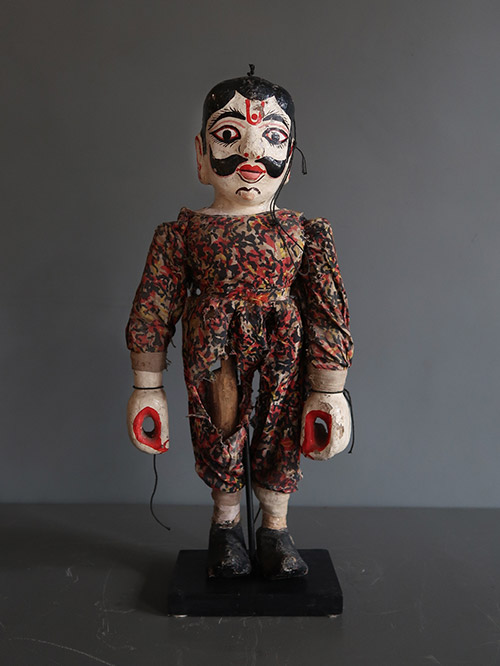
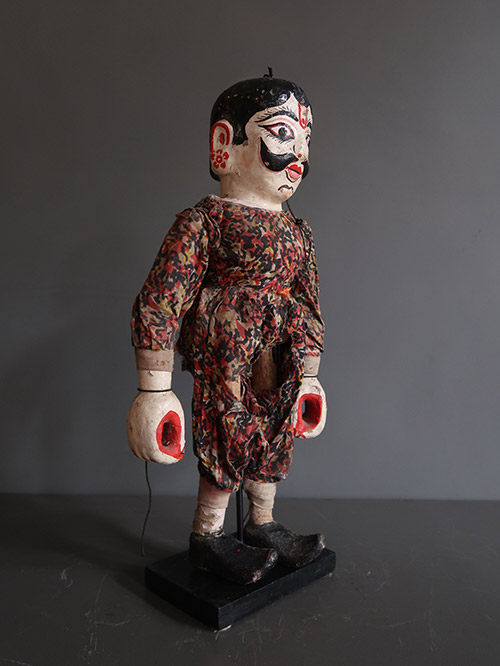
Orissa
Wood with cloth
An articulated wooden puppet from Orissa in the style of Kundhei. This art is performed by puppeteers in groups that travel from village to village performing shows. Kundhei is considered as a dying art form as performers turn to more sustainable forms of income. The costumes of Kundhei resemble those worn by actors of the Jatra traditional theatre.
Size(cms): 56 (H) x 25 (W) x 13 (D)
Size(inches): 22 (H) x 10 (W) x 5 (D)
-
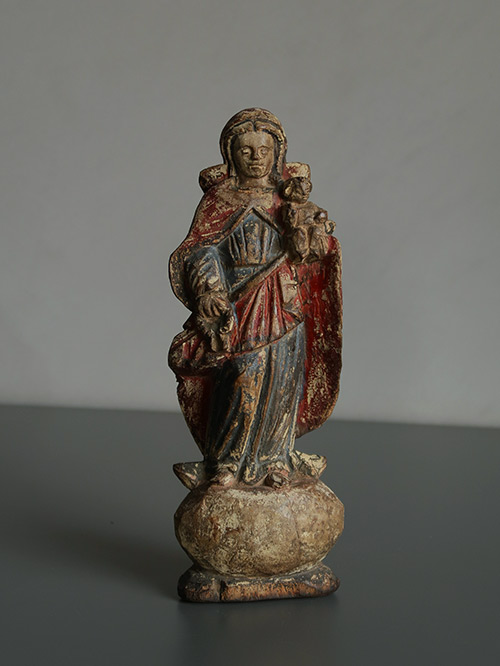
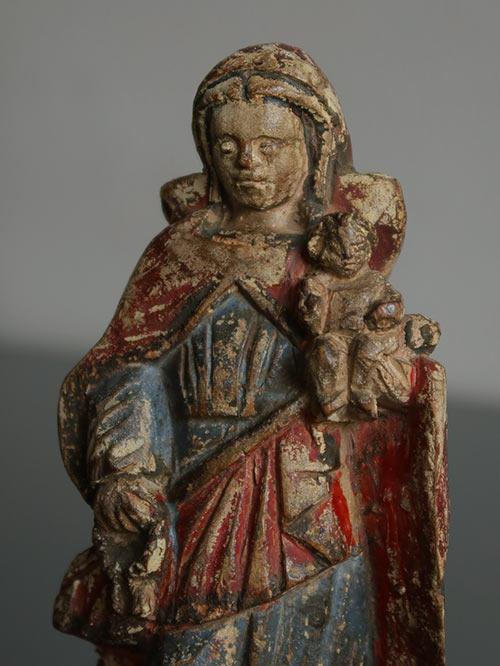
Goa (Indo-Portuguese)
Polychromed wood
A fine yet diminutive sculpture of the standing Virgin holding the infant Jesus of the Salvatore Mundi type, (Christ giving a benediction with his raised right hand and crossed fingers while holding a crystal sphere in his left hand). The figure of Mary has a slightly advanced right knee, typical of the Goan workshops. She wears a long blue patterned tunic with a round collar and a red cape is draped around her head. The style of the figure closely echoes the Portuguese rococo style with its graciousness and elaborate movement of drapery.
Size (cms): 22(H) x 8(W) x 4.5(D)
Size (inches): 8.5(H) x 3(W) x 2(D)
-
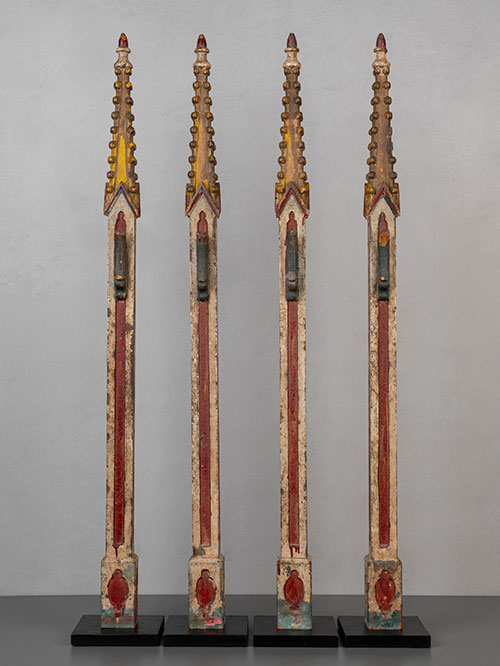
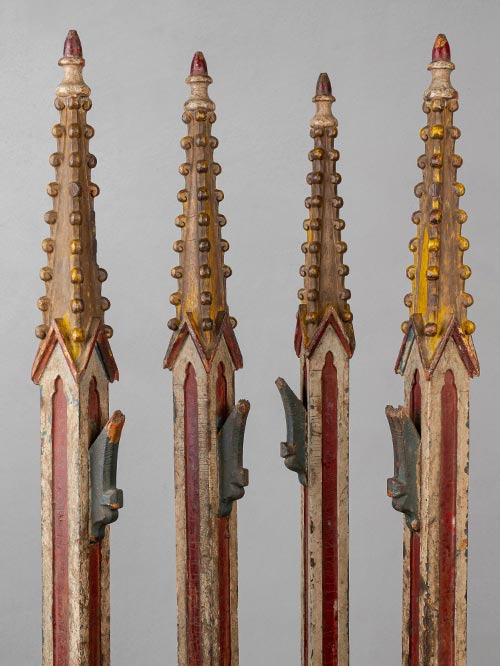
Goa
Wood with original polychroming
A sculptural set of four slim and elegant polychromed gothic style altar spires.
The Christians of Southern India have a long history and are one of the oldest Christian communities. They trace their origins to St. Thomas, an apostle of Jesus, who arrived in AD 52 and spread the new religion to other parts of the region. Despite the emergence of Roman Catholicism during Portuguese rule, Christianity remains strong in southern India with active churches and significant attendance on Sundays and feast days.
Magnificently adorned with churches and convents, Goa is often considered the Rome of the Orient, with its churches imitating grand European cathedrals featuring lofty halls, intricate wooden altars, and impressive masonry facades in the European baroque or neo-classical style. Hired by the bishops and priests, Indian woodworkers skilfully crafted altar carvings, images, and altarpieces that became the ritual and visual focal points within the interiors of churches. While these pieces were originally copied from and inspired by models imported from Portugal, the woodworkers began to showcase their creativity by blending European and Indian imagery and design conventions. The resulting art, known as Indo-Portuguese, represents a subtle fusion of elements brought from Europe with a rich local tradition. In its early stages, pieces were primarily crafted for both ecclesiastical and secular purposes. Altars, candlesticks, lecterns, and other objects carved with Christian symbolism conveyed the superiority of the new religion on Indian soil in imposing physical terms. These objects also showcased artistic prowess, often adorned with vibrant colours using hard wax and highlighted with gold.
Individual Sizes (cms): 113(H) x 16(W) x 16(D) each
Individual Size (inches): 44.5(H) x 6.5(W) x 6.5(D) each
-
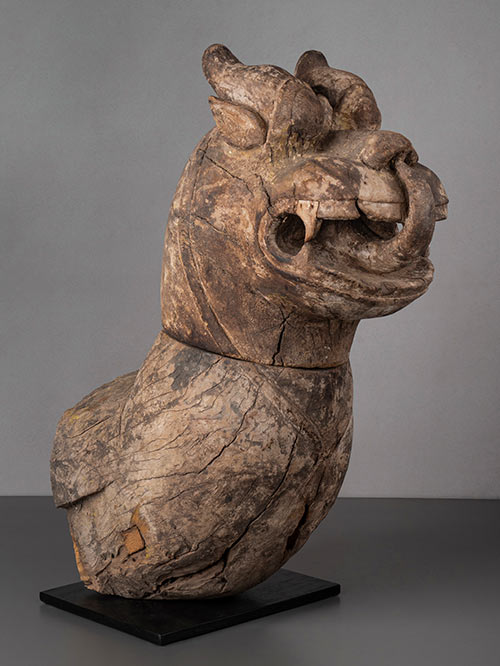

Karnataka
Wood
‘Yali’ or ‘Vyala’ denotes a mythical lion faced animal that appears on carved friezes on temple walls. They are fierce, leonine beasts with curvaceous bodies and enlarged heads surrounded by flame-like manes. They rear up on hind legs, the forelegs held out with clenched claws as if to pounce. Sometimes they are shown standing on human heads presumably of the demons that they have vanquished. In southern Indian sculpture from the 16th century onwards figures of rearing, almost three dimensional vyalis bearing heads either of horned lions or elephants and feline bodies guard the entrances of temples and line the approaches leading to sanctuaries.
Size (cms): 65(H) x 29(W) x 61(D)
Size (inches): 25.5(H) x 11.5(W) x 24(D)