Filter products Showing all 13 results
Sort By
Show Per Page
Filter products Showing all 13 results
Sort By
Show Per Page
  • Head of a Saint

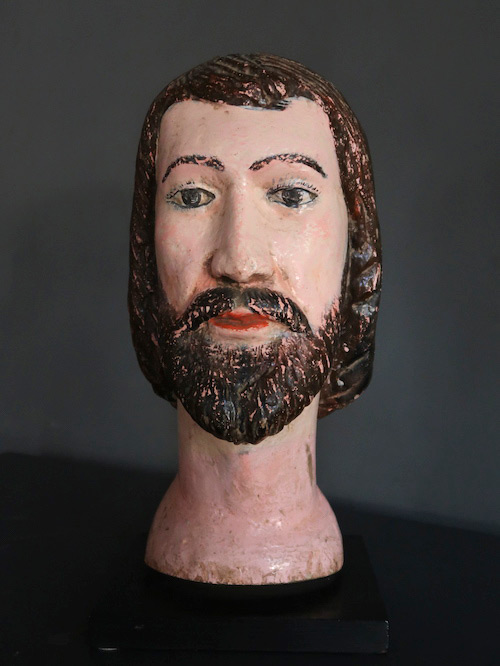
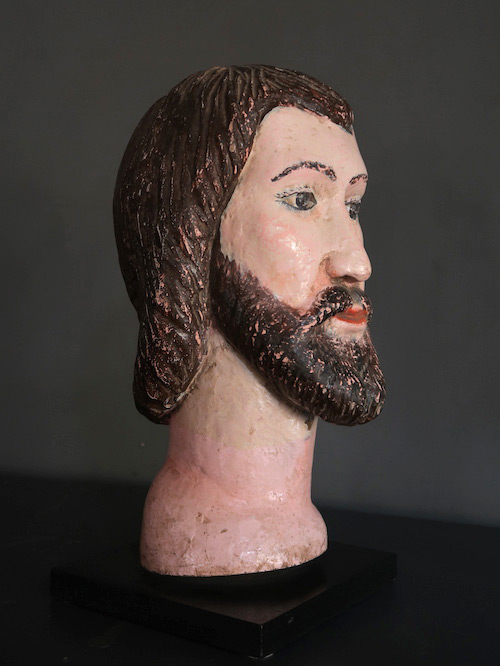
    Head of a Saint

    Indo-Portuguese, probably Goa

    Polychromed wood

    Saints figures normally used in processions, were called ‘Cribb’ (skeletal) figures, and were common in the East as well as in Portugal, Spain and Italy. In these figures most of the artistic effort went into rendering the head. The body comprised a simple wood structure which would be dressed, thus avoiding the need to sculpt the entire figure. To this were attached the head, hands and feet.

    Size(cms): 44 (H) x 19 (W) x 19 (D)
    Size(inches): 17 (H) x 7.5 (W) x 7.5 (D)

  • head of a dwarapalahead of a dwarapala

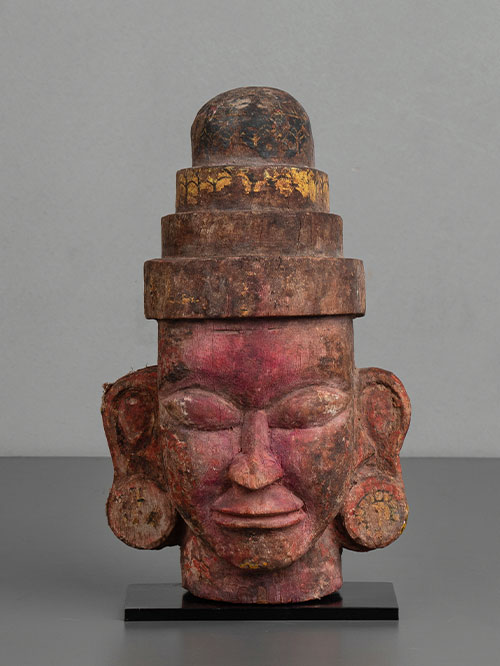
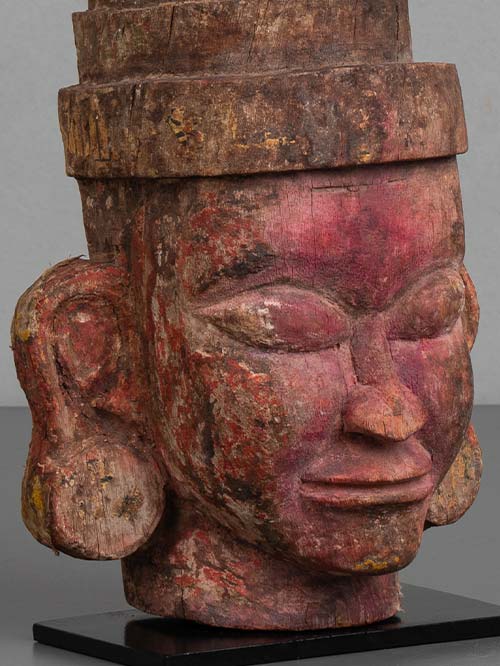
    Head of a Dwarapala

    Karnataka

    Wood

    A charming folk wooden carved head of a male attendant/guardian figure wearing a tiered crown and large ornamental earrings. Such figures were placed in folk temples in Karnataka and usually painted and clothed.

    Attendant figures called Dwarapalas or ‘door guardians’ are placed at the entrance of every temple, shrine or sacred precinct. Two or four-handed, they sometimes carry in their hands the emblem of the deity enshrined in the sanctuary. Their countenance may sometimes be fierce and occasionally fangs protrude from their mouths. Temples dedicated to goddesses have female guardians – the Dwarapalikas.

    Size (cms): 25(H) x 15(W) x 10(D)
    Size (inches): 10(H) x 6(W) x 4(D)

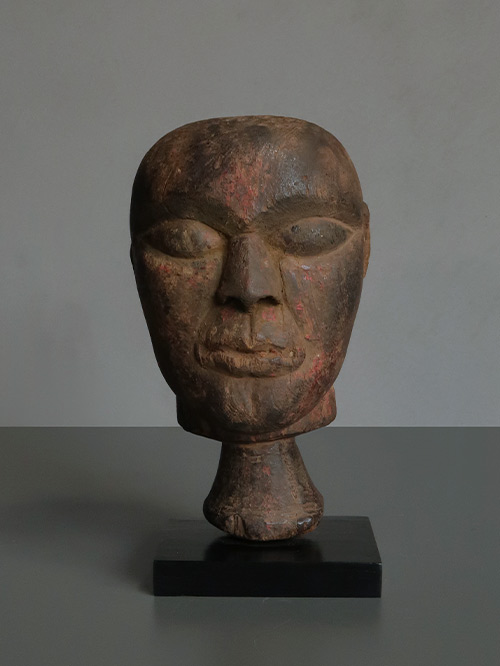
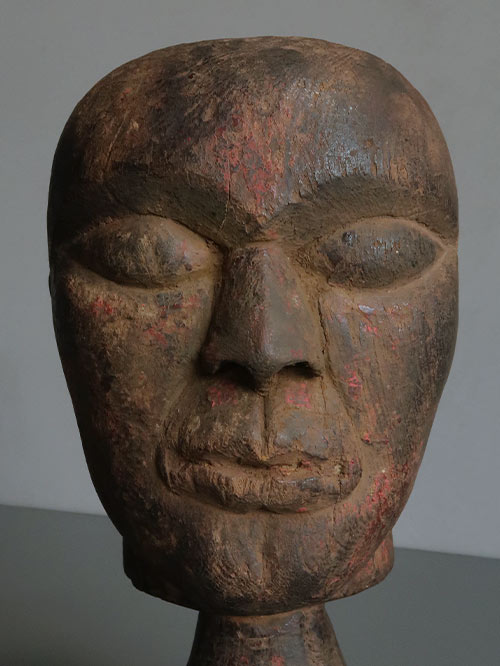
  • Head of a man

    Head of a man

    Karnataka

    Wood

    A charming folk wooden carved head of a male attendant/guardian figure. Such figures were placed in folk temples in Karnataka and usually painted and clothed. Attendant figures called Dvarapalas or ‘door guardians’ are placed at the entrance of temples, shrines or sacred precincts. Two or four-handed, they carry in their hands the emblem of the deity enshrined in the sanctuary. Their countenance may be fierce or gentle. Temples dedicated to goddesses have female guardians – the Dwarapalikas.

    Size (cms): 27(H) x 13(W) x 14(D)
    Size (inches):
    10.5(H) x 5(W) x 5.5(D)

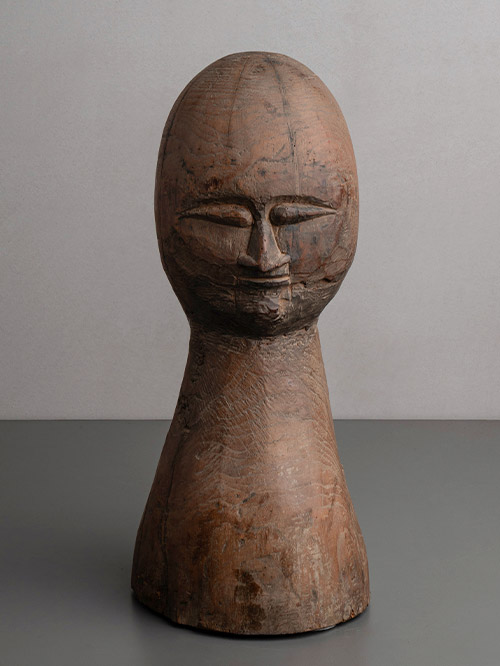
  • turban headturban head

    Turban Head

    Western India

    Wood

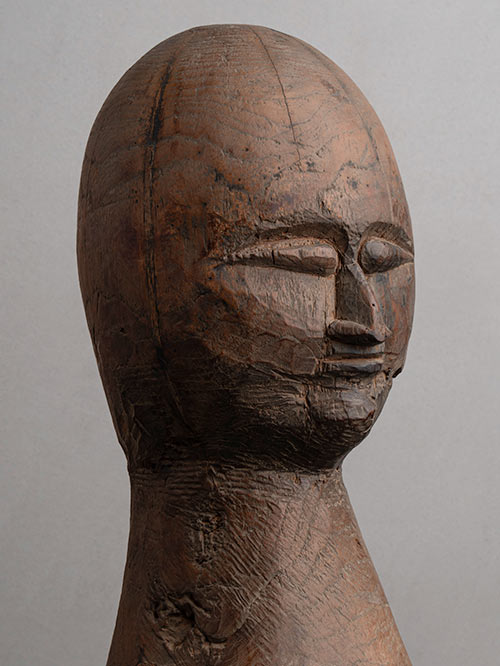
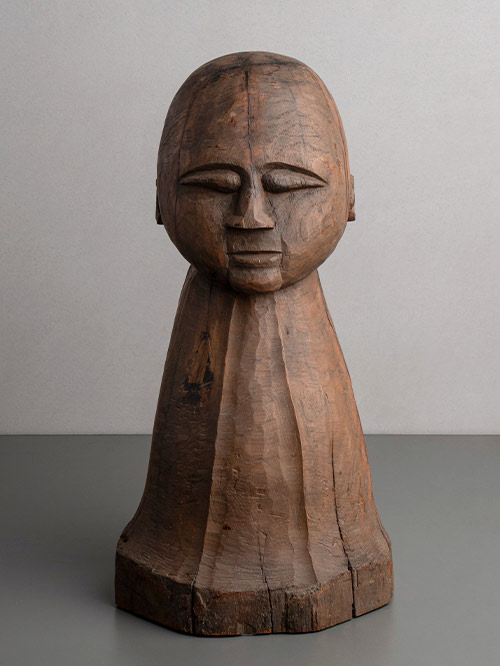
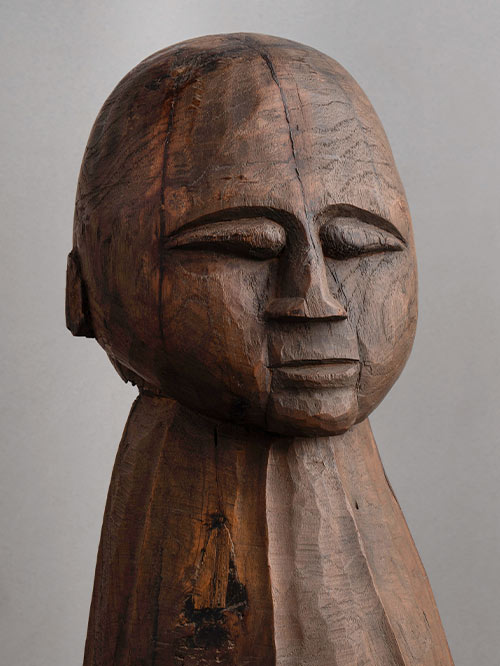
    A striking patinated wooden turban stand that has been worn through use. It would have been used to hold a turban.

    Size (cms): 39(H) x 17(W) x 19(D)
    Size (inches): 15.5(H) x 6.5(W) x 7.5(D)

  • turban headturban head

    Turban Head

    North India

    Wood

    A lovely patinated wooden turban stand that has been worn through use. It would have been used to display a Sikh turban.

    Size (cms): 41(H) x 22(W) x 20(D)
    Size (inches):
    16(H) x 8.5(W) x 8(D)

  • Bhairava 'Demon Scarer'

    Bhairava ‘Demon Scarer’

    Northern Karnataka (South India)

    brass

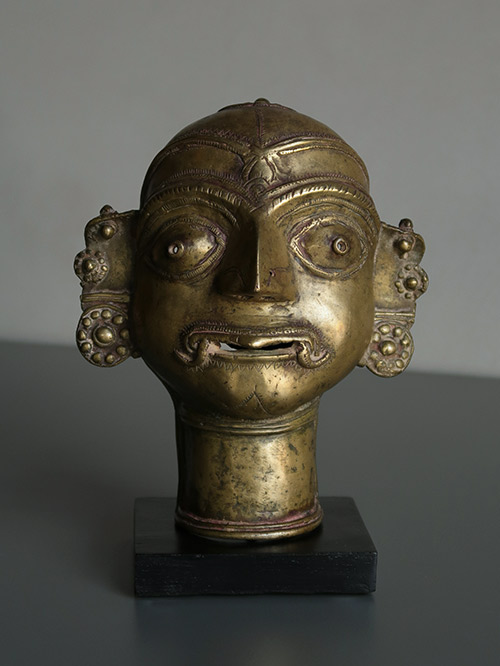
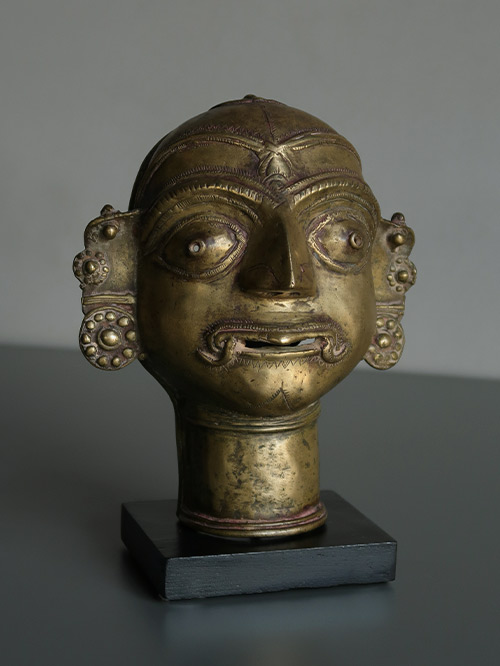
    A finely cast small Bhairava head, the ferocious form of Shiva. The head has a rounded tubular extension at its base, which would fit over a pole and could be carried above the heads of the populace during festivals and processions. The fanged visage has bulging eyes and cheeks and with finely cast earrings. A prominent third eye, a symbol of Shiva’s destructive force, is a key identifier. ⁠

    The use of monster figures and monster masks, usually made of bronze, was also used for this purpose. These mostly depicted a demonic form of Bhairava, one of the avatars of Shiva.  They were made with a rounded tubular extension at its base, which would fit over a  pole and could be carried above the heads of the populace during festivals and processions. A moustachioed visage was usually portrayed characterised by a vicious face with bulging eyes and cheeks and with a huge gaping mouth with large teeth and fangs. The forehead of the figure often carried the third eye, a symbol of Shiva’s destructive force, and sometimes also include sectarian marks consisting of three horizontally oriented straight or slightly curved lines. Other masks exhibited a distinct animal-like visage with huge teeth and a gigantic mouth. Those were often referred to as ‘tiger masks’. Some masks assumed the expression of a gargoyle with huge, bulging cheeks. Others incorporated composite features including tusks, bossing of the skull and occasionally the horns of a ram.

    Protective deities such as viras (deified heroes),  kshetrapalas (guardians), bhutas (spirits of various deities),  including some daivas (devils) were expected to provide protection against invaders, thieves, the elements- fire , storms, floods, drought, disease etc. Since the earth was populated by gods and their counterparts in the nether world, demons, evil spirits and ghosts, prayers, offerings and sacrifices were made to both groups to propitiate them.

    Size (cms): 18.5(H) x 15.5(W) x 9(D)
    Size (inches): 7.5(H) x 6(W) x 3.5(D)

  • Bhairava 'Demon Scarer'

    Bhairava ‘Demon Scarer’

    Northern Karnataka (South India)

    brass

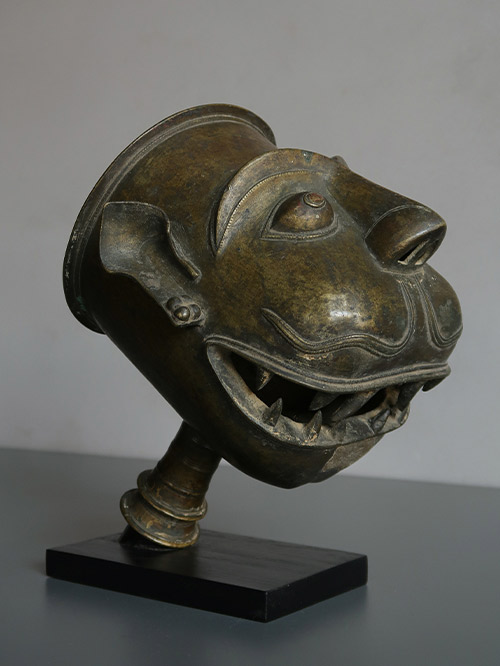
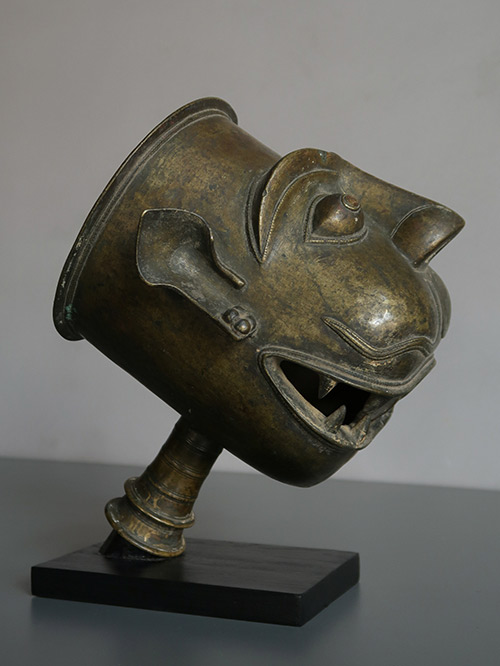
    A monstrous animal like head depicting the demonic form of Bhairava, one of the avatars of Shiva. The moustachioed visage has a vicious face with bulging eyes and cheeks and with a huge gaping mouth with large teeth and fangs. The head has a rounded tubular extension at its base, which would fit over a pole and could be carried above the heads of the populace during festivals and processions.

    Protective deities such as viras (deified heroes),  kshetrapalas (guardians), bhutas (spirits of various deities), including some daivas (devils) were expected to provide protection against invaders, thieves, the elements- fire , storms, floods, drought, disease etc. Since the earth was populated by gods and their counterparts in the nether world, demons, evil spirits and ghosts, prayers, offerings and sacrifices were made to both groups to propitiate them.

    Size (cms): 28(H) x 22(W) x 23.5(D)
    Size (inches):
    11(H) x 8.5(W) x 9.5(D)

  • Demon Scarer

    Demon Scarer

    Karnataka

    brass alloy

    A finely cast Bhairava head also know as a ‘Demon Scarer’. The head has a rounded tubular extension at its base, which would fit over a pole and could be carried above the heads of the populace during festivals and processions. The moustachioed visage has a vicious face with bulging eyes and cheeks and with a huge gaping mouth with large teeth and fangs.

    Such monster figures and monster masks depict a demonic form of Bhairava, one of the avatars of Shiva. Some masks exhibited a distinct animal-like visage with huge teeth and a gigantic mouth. Those were often referred to as ‘tiger masks’. Some masks assumed the expression of a gargoyle with huge, bulging cheeks. Others incorporated composite features including tusks, bossing of the skull and occasionally the horns of a ram.

    Protective deities such as viras (deified heroes),  kshetrapalas (guardians), bhutas (spirits of various deities), including some daivas (devils) were expected to provide protection against invaders, thieves, the elements- fire , storms, floods, drought, disease etc. Since the earth was populated by gods and their counterparts in the nether world, demons, evil spirits and ghosts, prayers, offerings and sacrifices were made to both groups to propitiate them.

    Size (cms): 28(H) x 24(W) x 16(D)
    Size (inches): 11(H) x 9.5(W) x 6.5(D)

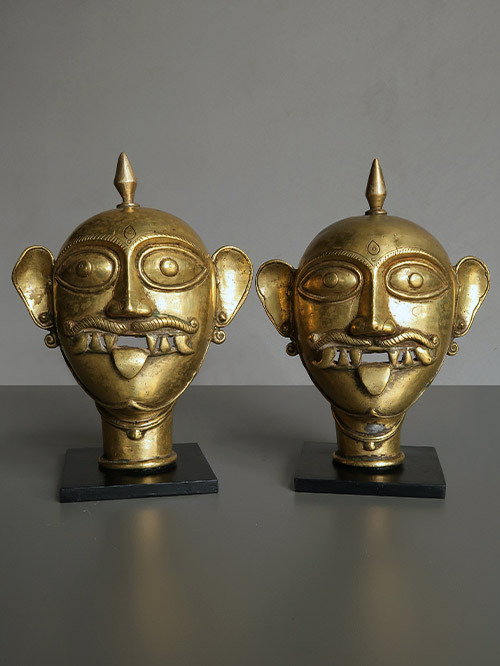
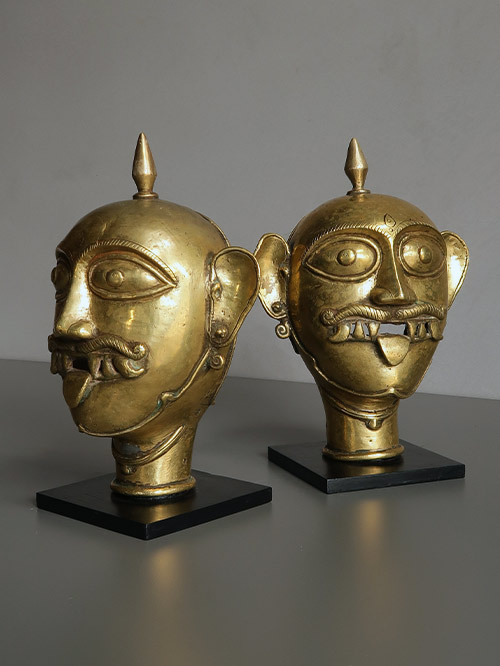
  • Pair of Demon Scarers

    Pair of Demon Scarers

    Karnataka

    brass alloy

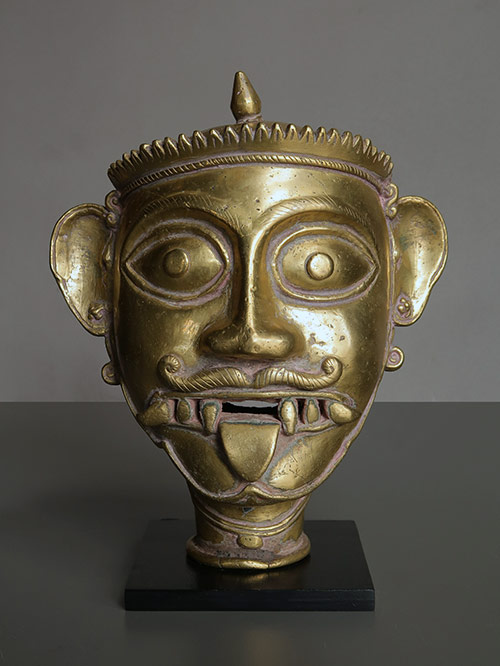
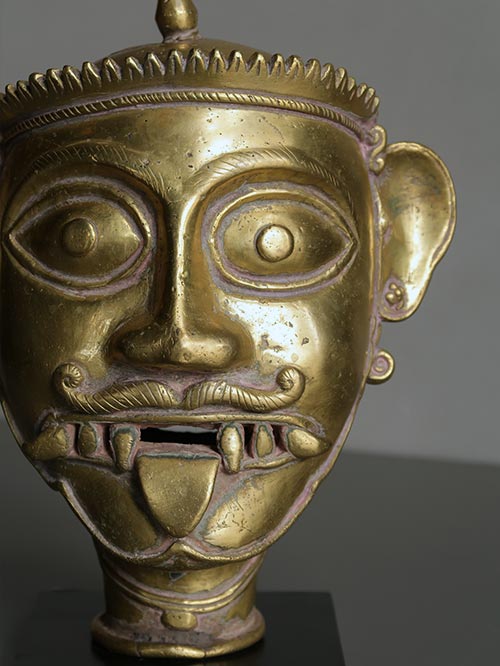
    A beautiful pair of brass cast Bhairava heads also know as a ‘Demon Scarers’. Both visages are moustachioed with vicious gaping mouths with large teeth, fangs and protruding tongues. The heads have a rounded tubular extension at their base, which would fit over a pole and could be carried above the heads of the populace during festivals and processions.

    Such monster figures and monster masks depict a demonic form of Bhairava, one of the avatars of Shiva. Some masks exhibited a distinct animal-like visage with huge teeth and a gigantic mouth. Those were often referred to as ‘tiger masks’. Some masks assumed the expression of a gargoyle with huge, bulging cheeks. Others incorporated composite features including tusks, bossing of the skull and occasionally the horns of a ram.

    Protective deities such as viras (deified heroes),  kshetrapalas (guardians), bhutas (spirits of various deities), including some daivas (devils) were expected to provide protection against invaders, thieves, the elements- fire , storms, floods, drought, disease etc. Since the earth was populated by gods and their counterparts in the nether world, demons, evil spirits and ghosts, prayers, offerings and sacrifices were made to both groups to propitiate them.

    Size (cms): 29(H) x 23(W) x 15(D) each
    Size (inches): 11.5(H) x 9(W) x 6(D) each

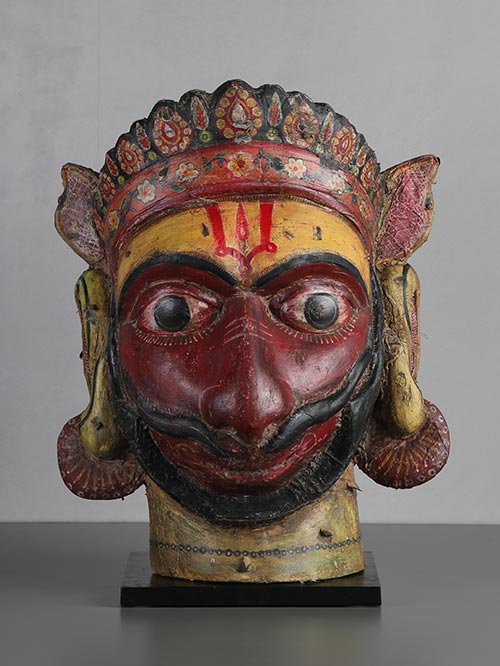
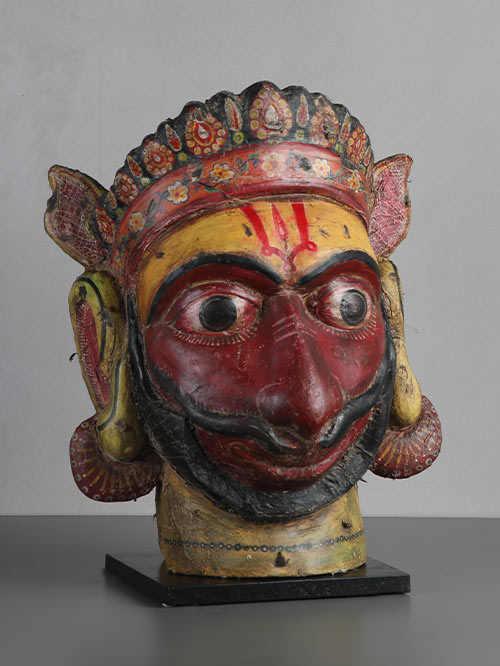
  • Hanuman Head

    Hanuman Head

    Orissa (Eastern India)

    Wood, extensively polychromed

    A magnificent and rare processional head in good condition with original colour and patina

    Hanuman is a popular deity who is worshipped all over India, particularly in villages and in the South. His story is found in the Ramayana where he is the ubiquitous servant of Rama, the epitome of devoted service and loyalty. His search for the heroine Sita, captured by Ravana, illustrates his superhuman powers and zealous performance of the tasks that were given to him.

    Shahi Jatras (royal processions) of Orissa present different episodes from the Ramayana during the spring season, usually lasting for for one week. Actors, carrying huge wooden masks and gorgeous costumes, walk on the streets with stylized gait and mime with the accompaniment of loud drumming. The Desia Nata of Koraput, Orissa, also uses masks for representing gods, goddesses, animals, birds and demons. These themes are also taken from Ramayana.

    Size (cms): 56(H) x 46(W) x 43(D)
    Size (inches): 22(H) x 18(W) x 17(D)

  • tiger head (copy)tiger head (copy)

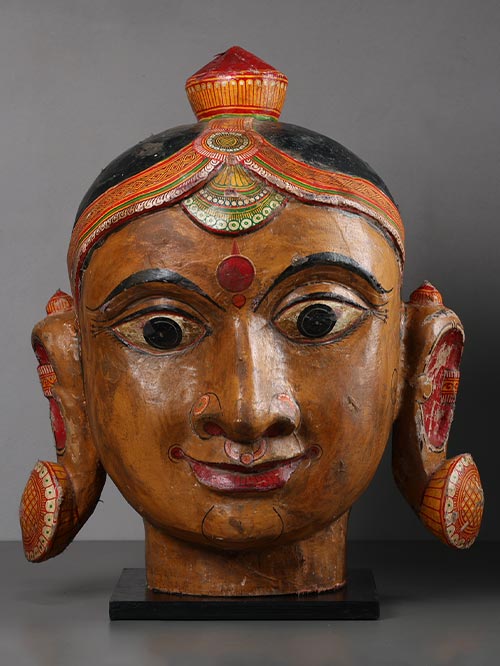
    Sita Head

    Orissa (Eastern India)

    Wood, extensively polychromed

    A magnificent and rare processional head in good condition with original colour and patina

    Sita, is the central female character of the Hindu epic Ramayana and a daughter of King Janak of Janakpur. She is the consort of the Hindu god Rama (avatar of Vishnu) and is an avatar of Lakshmi (Aadi Shakti of Lord Vishnu), goddess of wealth and wife of Vishnu. She is esteemed as a paragon of spousal and feminine virtues for all Hindu women. Sita is known for her dedication, self-sacrifice, courage and purity.

    Shahi Jatras (royal processions) of Orissa present different episodes from the Ramayana during the spring season, usually lasting for for one week. Actors, carrying huge wooden masks and gorgeous costumes, walk on the streets with stylized gait and mime with the accompaniment of loud drumming. The Desia Nata of Koraput, Orissa, also uses masks for representing gods, goddesses, animals, birds and demons. These themes are also taken from Ramayana.

    Size (cms): 61(H) x 50(W) x 48(D)
    Size (inches): 24(H) x 19.5(W) x 19(D)

  • tiger headtiger head

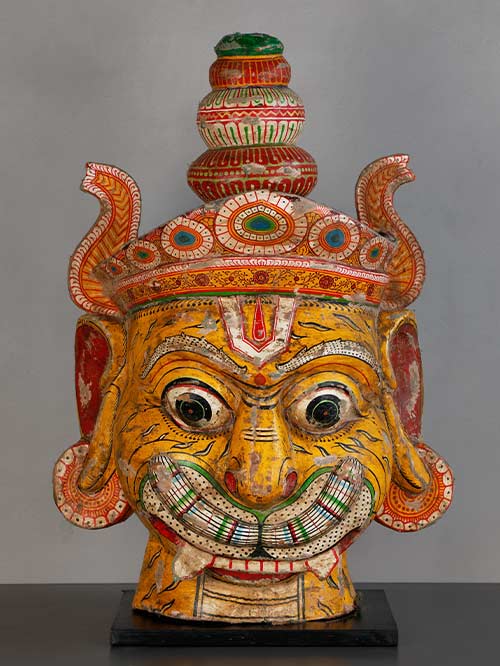
    Tiger Head

    Orissa (Eastern India)

    Wood, extensively polychromed

    A beautiful large polychromed wooden head of a Tiger painted yellow with large white and black bubris (stripes) and a characteristic candy cane moustache. In typical Orissan style, the tiger has large geometric earrings and a decorated tiered crown. ⁠

    Shahi Jatras (royal processions) of Orissa present different episodes from the Ramayana during the spring season, usually lasting for for one week. Actors, carrying huge wooden masks and gorgeous costumes, walk on the streets with stylized gait and mime with the accompaniment of loud drumming. The Desia Nata of Koraput, Orissa, also uses masks for representing gods, goddesses, animals, birds and demons. These themes are also taken from Ramayana.

    Size (cms): 76(H) x 56(W) x 47(D)
    Size (inches): 30(H) x 22(W) x 18.5(D)

  • varaha headvaraha head

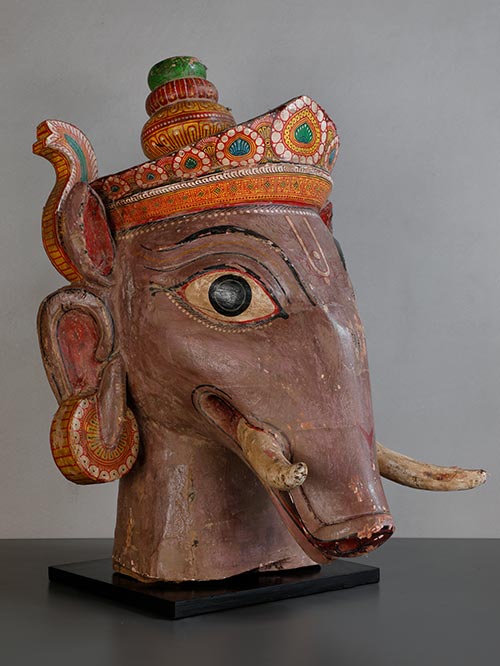
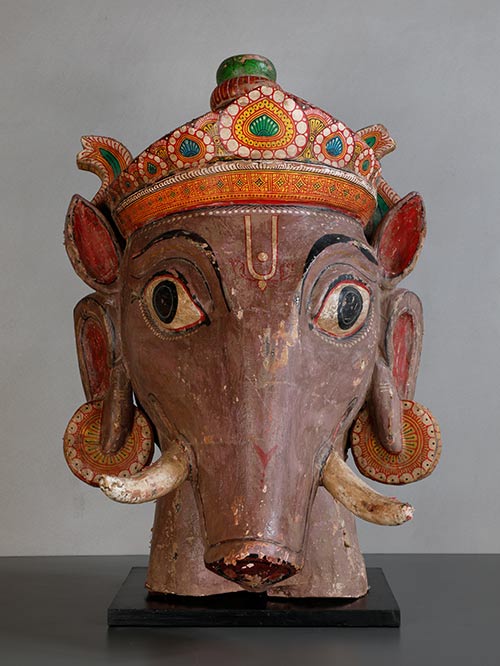
    Varaha Head

    Orissa (Eastern India)

    Wood, extensively polychromed

    A magnificent and rare processional head in good condition with original colour and patina. Varaha is the third avatar of Lord Vishnu. He is usually depicted as half-human and half-boar, slaying the asura Hiranyaksha and carrying a conch shell, a discus, a mace, and a lotus flower in his four hands. He is considered to be the saviour of the world and the protector of the earth and his worship is believed to bring prosperity and good fortune.

    Shahi Jatras (royal processions) of Orissa present different episodes from the Ramayana during the spring season, usually lasting for for one week. Actors, carrying huge wooden masks and gorgeous costumes, walk on the streets with stylized gait and mime with the accompaniment of loud drumming. The Desia Nata of Koraput, Orissa, also uses masks for representing gods, goddesses, animals, birds and demons. These themes are also taken from Ramayana.

    Size (cms): 75.5(H) x 59(W) x 56(D)
    Size (inches): 29.5(H) x 23(W) x 22(D)

Phillips Antiques

PHILLIPS

Subscribe to our Newsletter to stay updated with newest arrivals.
SUBSCRIBE NOW
close-link