“Dish with Arabic inscriptions” has been added to your cart.
View cart
-
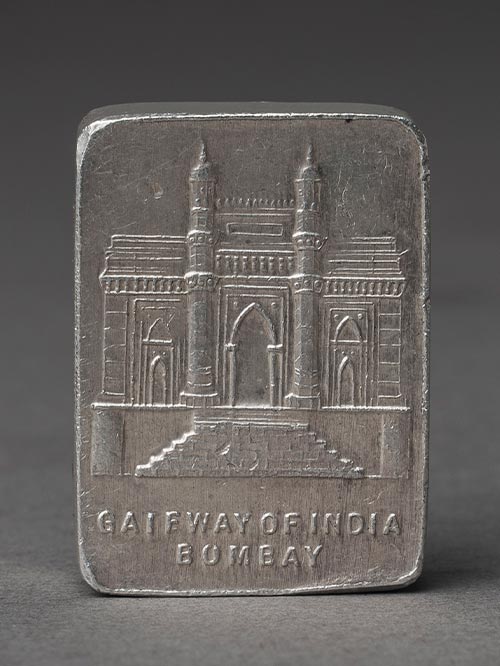
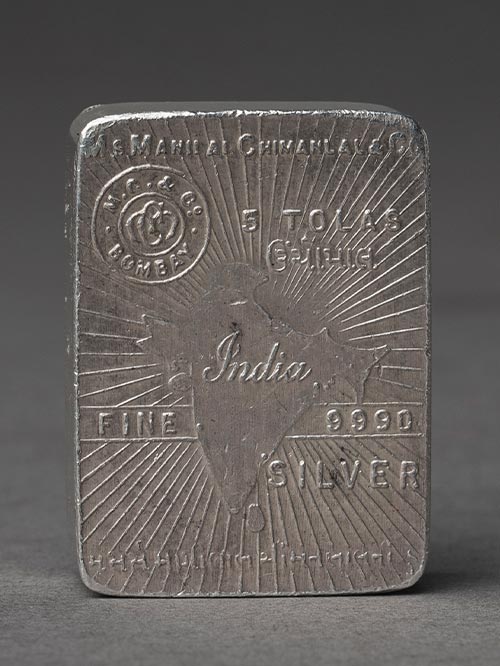
Manilal Chimanlal & Co., Bombay
Silver, 5 Tolas
This rare rectangular silver bar, dating from the late 1950s to early 1960s, depicts a view of the Gateway of India with an embossed caption on one side. On the reverse, there is a map of undivided India, accompanied by details including its weight (5 tolas) and maker’s mark. The term ‘tola’ denotes a unit of mass commonly used in South Asia, with one tola equivalent to 11.66 grams. Therefore, this bar weighs 58.3 grams. It’s noteworthy that the majority of such bars would have been melted down by the Indian government and recast.
Size (cms): 3(H) x 2(W) x 1(D)
Size (inches): 1(H) x 1(W) x 0.5(D)
-
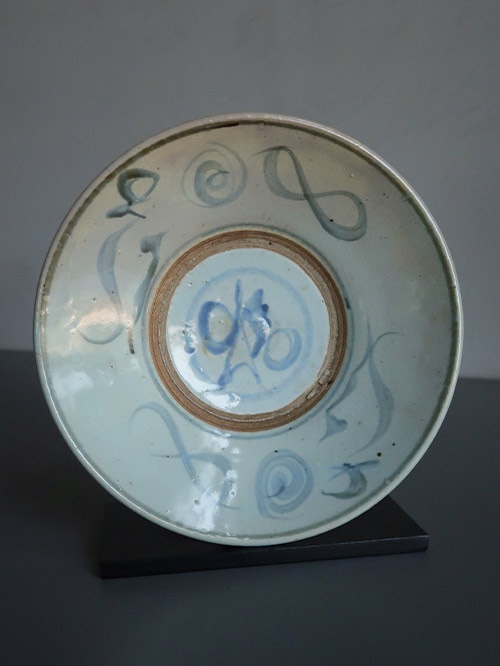
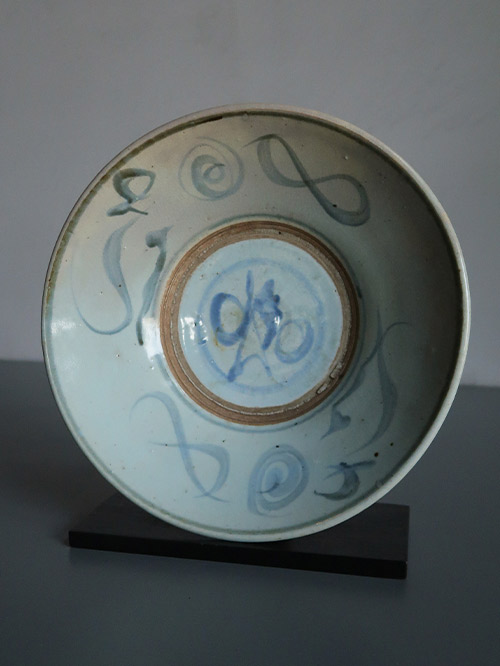
ceramic
A considerable amount of Chinese porcelain and ceramics were exported to the Turkish empire, Persia and the native states of India during the 18th and 19th centuries, much of it employing decorative motifs which were echoed in the designs on tin-glazed and other wares made in those countries.
Size (cms): 5.5 (H) x 26 (Diam)
Size (inches): 2.2 (H) x 10.2 (Diam)
-
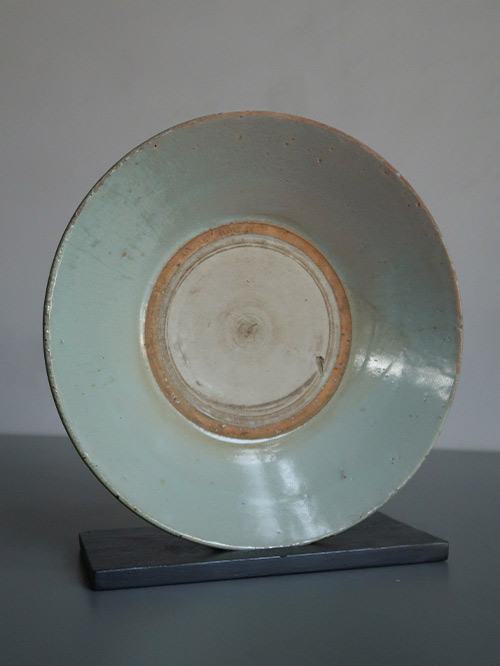
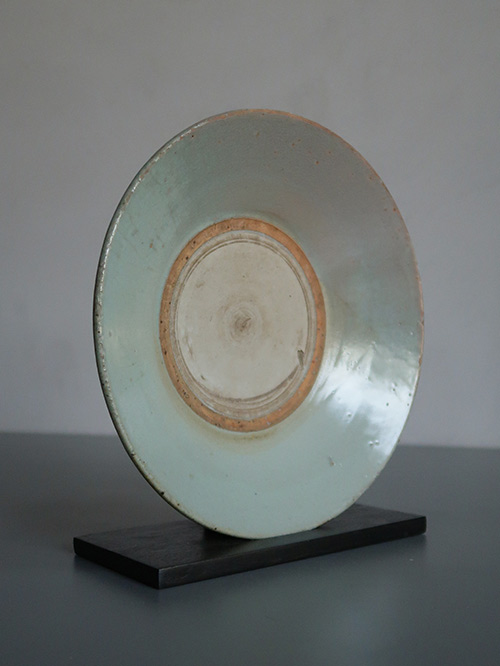
ceramic
A considerable amount of Chinese porcelain and ceramics were exported to the Turkish empire, Persia and the native states of India during the 18th and 19th centuries, much of it employing decorative motifs which were echoed in the designs on tin-glazed and other wares made in those countries.
Size (cms): 5.5 (H) x 25 (Diam)
Size (inches): 2.2 (H) x 9.8 (Diam)
-
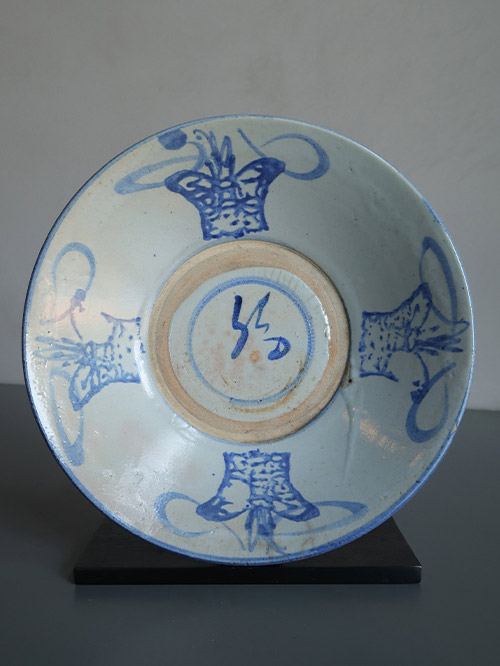
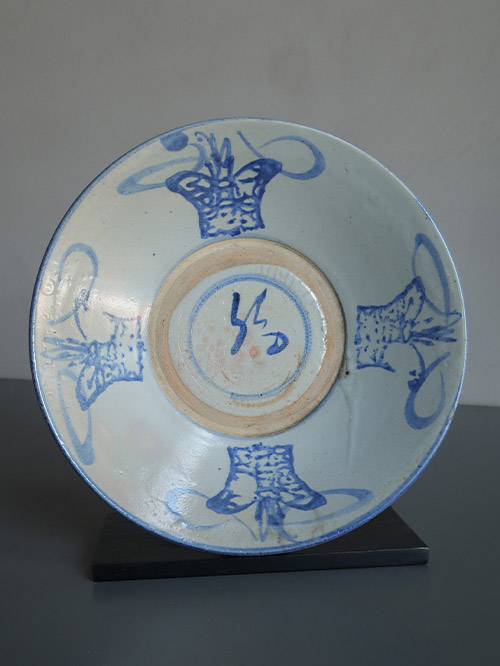
ceramic
A considerable amount of Chinese porcelain and ceramics were exported to the Turkish empire, Persia and the native states of India during the 18th and 19th centuries, much of it employing decorative motifs which were echoed in the designs on tin-glazed and other wares made in those countries.
Size (cms): 6 (H) x 26.5 (Diam)
Size (inches): 2.4 (H) x 10.4 (Diam)
-
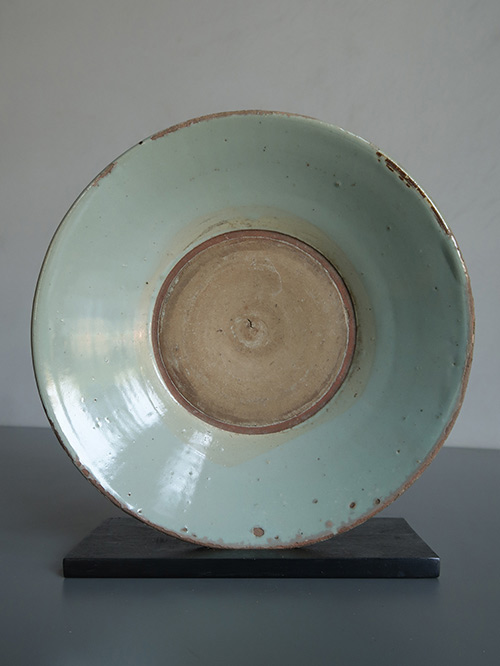
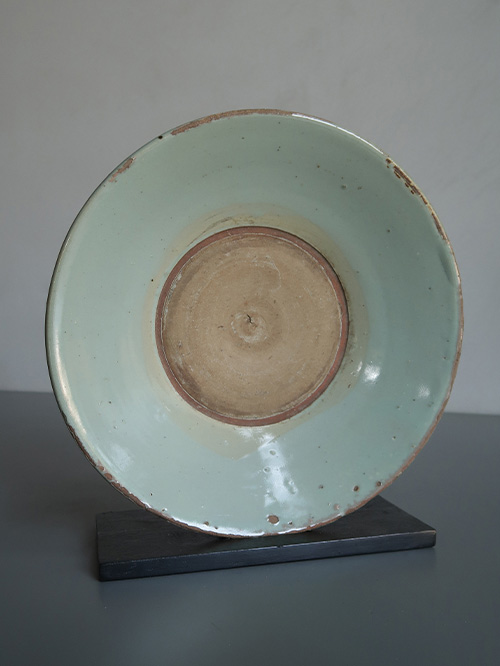
ceramic
A considerable amount of Chinese porcelain and ceramics were exported to the Turkish empire, Persia and the native states of India during the 18th and 19th centuries, much of it employing decorative motifs which were echoed in the designs on tin-glazed and other wares made in those countries.
Size (cms): 5.75(H) x 25(Diam)
Size (inches): 2.5(H) x 10(Diam)
-


Staffordshire, England
Earthenware, transfer-printed
Marked ‘Copeland, late Spode’
A beautiful earthenware dish Arabic inscriptions made for the Islamic markets. The inscription in the Center translates as ‘Allah the one, there is no partner to Him/ Muhammad is the Prophet of Allah/ Indeed you are the Conqueror.’ The top and bottom inscriptions on the outer border translate as ‘There is no God but Allah.’ The names of the four Caliphs, Abubaker, Umar, Usman and Ali also appear on the outer border in vignettes among foliate swirls.
Manufacturers and retailers in Britain, looking to expand their markets to the British empire and beyond, started production of plates with inscriptions in Arabic taken from the Qur’an. These plates sometimes found in Indonesia and India were made for sale in countries with a significant Muslim population. An identical Copeland plate, but in blue is in the collection of the V&A, London.
Size (cms): 5.75(H) x 29.25(Diam)
Size (inches): 2.5(H) x 11.5(Diam)
-
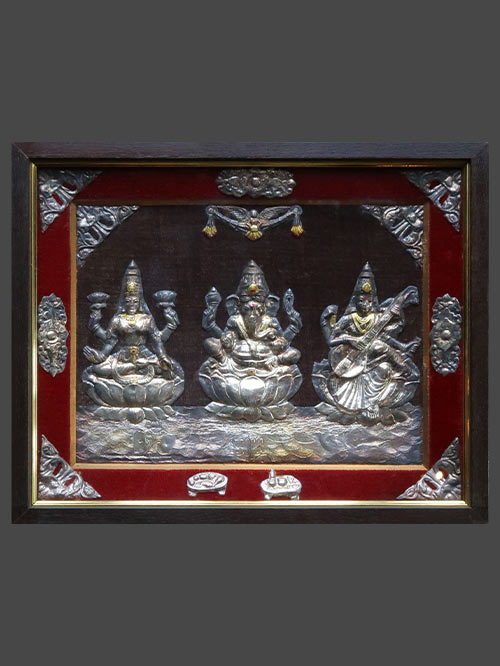
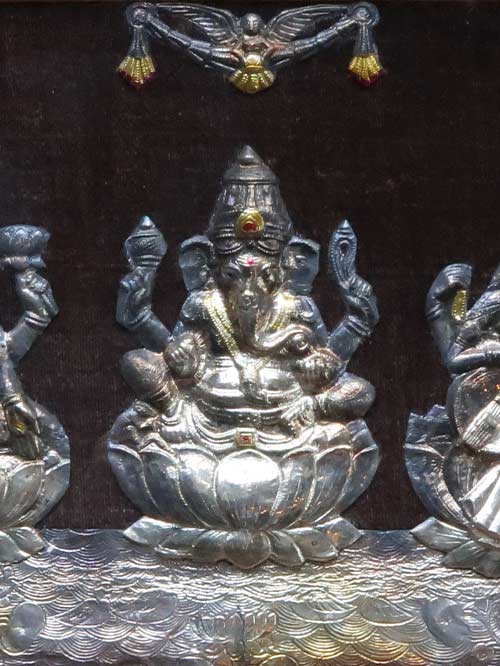
Tamil Nadu (South India)
silver repoussé on velvet
Ganesha, four armed, is seated cross legged on a lotus throne. He carries a mace, a noose, a ball of modak and his broken tusks in his four hands. Directly above is the figure of a single winged angel with stylised wings. He is flanked by the figures of Lakshmi and Saraswati, each seated on their lotus thrones. The deities appear to float on the waves of the cosmic ocean.
Framed Size (cms): 42 (H) x 54 (W)
Framed Size (inches): 16.5 (H) x 21 (W)
-
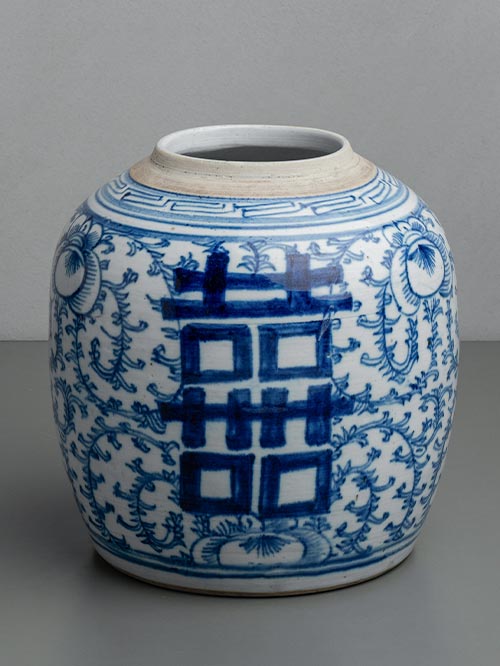
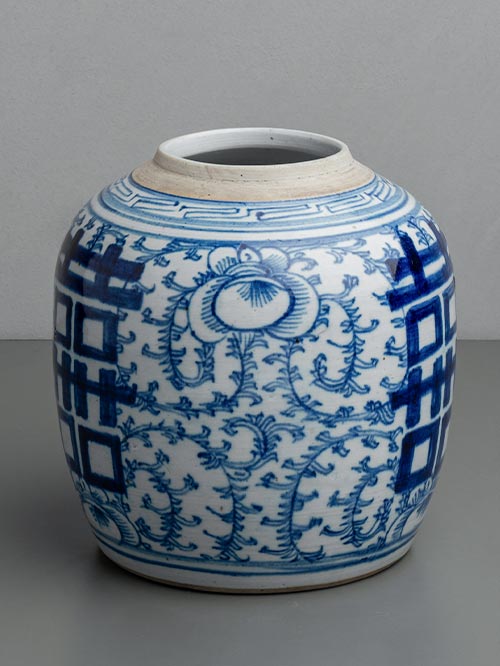
China (for the export market)
Porcelain, ‘floral patterns and characters’
Ginger jars are steeped in centuries of Chinese culture and history. Shaped with a wide mouth, a domed lid and a bulging, bulbous spherical hand painted body, they come in various styles and sizes and many different colours. Porcelain Chinese ginger jars were originally used to store food supplies like salt, herbs, oil and ginger (rare spices at that time), other ginger jars were allocated to be used as gifts. The jars acquired the name “ginger jars” because they often contained ginger when they were exported to the West. Some of the decorative treatments on ginger jars have included dragons, carp, landscapes, and florals, either glazed in a rainbow of colours or limited to the blues and whites of flow blue. Because of their wide shape, ginger jars lent themselves to a “rose medallion” treatment, in which florid designs around the jar framed smaller scenes, almost like a graphic novel in porcelain.
Size (cms): 22.5(H) x 22(Diam)
Size (inches): 9(H) x 8.5(Diam)
-
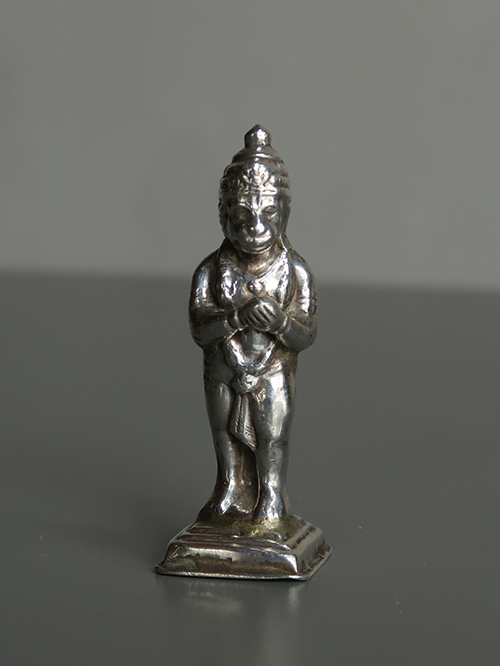

Maharashtra
silver
A charming yet worn figure of Hanuman standing with his hands held together. His tail extends from the right hip upward terminating above his head.
The story of Hanuman is found in the Ramayana where he is the ubiquitous servant, the epitome of devoted service and loyalty. His search for the heroine Sita, captured by Ravana, illustrates his superhuman powers and zealous performance of the tasks that were given to him.
Size (cms): 8.8(H) x 3.1(W) x 4.6(D)
Size (inches): 3.5(H) x 1(W) x 2(D)
-
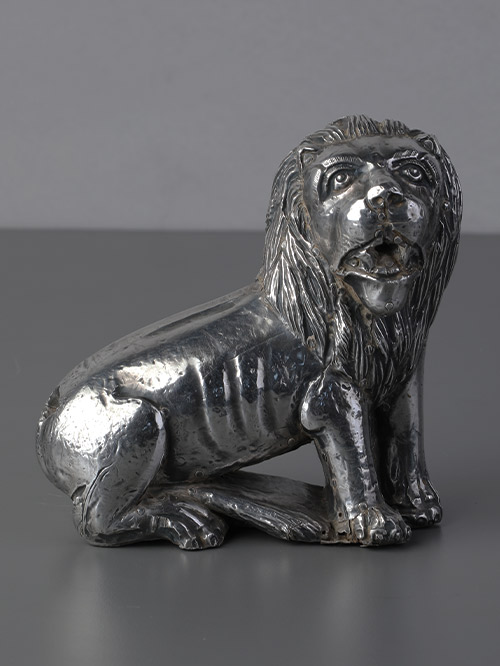
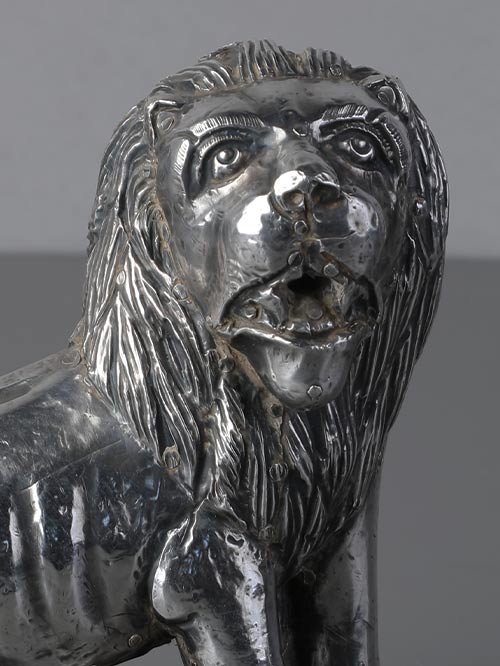
Gujarat
silver on wood
A decorative silver lion with a wooden frame. The ferocious looking lion is seated on its hind legs and is open mouthed, exposing large teeth. These would have served as symbolic supports to the inner sanctum of home shrine.
Among the Jains the lion served as the mount of Mahavira, the 24th and last Jina. Mahavira was the twenty-fourth Tirthankara (ford-maker) of Jainism which was revived and reestablished by him. In the Jain tradition, it is believed that Mahavira was born in the early part of the 6th century BC into a royal family in what is now Bihar, India. At the age of thirty, abandoning all worldly possessions, he left his home in pursuit of spiritual awakening and became an ascetic. For the next twelve and a half years, Mahavira practiced intense meditation and severe austerities, after which he is believed to have attained omniscience.
Size (cms): 15(H) x 14.5(W) x 7.5(D)
Size (inches): 6(H) x 5.5(W) x 3(D)
-


Tamil Nadu
polychromed terracotta
An attractive pair of Lion vahanas with lovely patina and extensive polychroming. They are depicted mid-stride walking within tall foliage. Terracotta toys were used as ritual display in temples during important festivals such as Holi, Shivaratri and Durga Puja.
The Lion is the vehicle of, and sacred to the Hindu goddess, Durga. From a certain perspective she is India’s Mother Nature, for she is the deification of Energy. Her consort, Shiva, sometimes evoked as Shambo, wears a tiger skin to indicate that he is beyond the bounds of the natural world.
Individual Sizes (cms): 18(H) x 25(W) x 10.5(D)
Individual Sizes (inches): 7(H) x 10(W) x 4(D)
-


Rajasthan
silver
Fine silver circular tray with a domed perfume container. The outer border of the tray is tray decorated with chased floral and geometric designs enclosing a double band of petal like cusped lobes reminiscent of architectural niches. The central perfume container sits within a chased floral band and has a hinged onion shaped domed lid with stepped patterns and a knop finial. Perfumes in Mughal India were used not just to scent oneself but also for medicinal purposes, the most common type of perfume was attar of roses.
Size (cms): 7(H) x 18.5(Diam)
Size (inches): 3(H) x 7.5(Diam)
-
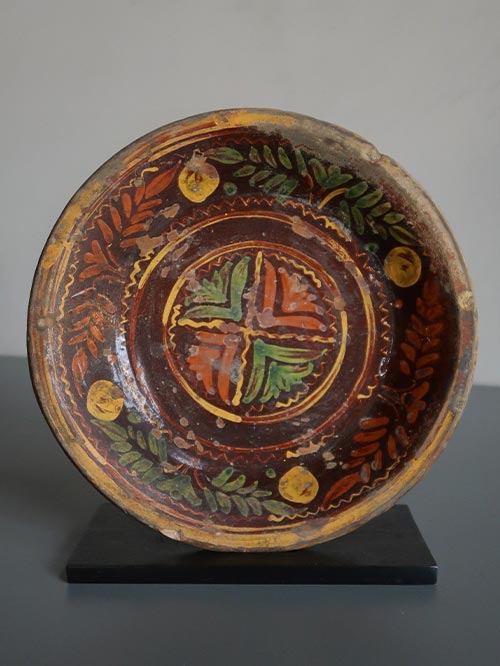
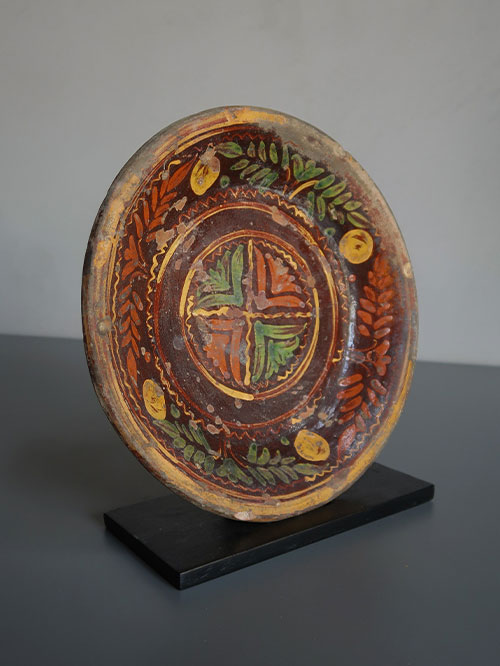
Sindh
glazed pottery
A decorative glazed pottery dish from the Sindh region, beautiful for its simplicity in shape, the spontaneity, directness, and propriety of its ornamentation, and the beauty of its colouring. This dish is very different from the commonly available unglazed pottery of Sindh and the Punjab. The glazed pottery of Sindh is made principally at Hala, Hyderabad, Tatta and Jerruck. The pieces are glazed mostly in turquoise, of the most perfect transparency, or in a rich dark purple, or dark green, or golden brown. Sometimes they are diapered all over by the pâte-sur-pâte method, with a conventional flower, the seventi, or lotus, of a lighter colour than the ground. Generally they are ornamented with the universal knop and flower pattern, in compartments formed all round the bowl, by spaces alternately left uncoloured and glazed in colour. Sometimes a wreath of the knop and flower pattern is simply painted round the bowl on a white ground. The glazed pottery of Sindh also inspired the Bombay School of Art pottery. Some of the best potters from Sindh were brought to the School to teach the pupils the technique.
Size (cms): 3.75(H) x 26(Diam)
Size (inches): 1.5(H) x 10(Diam)
-

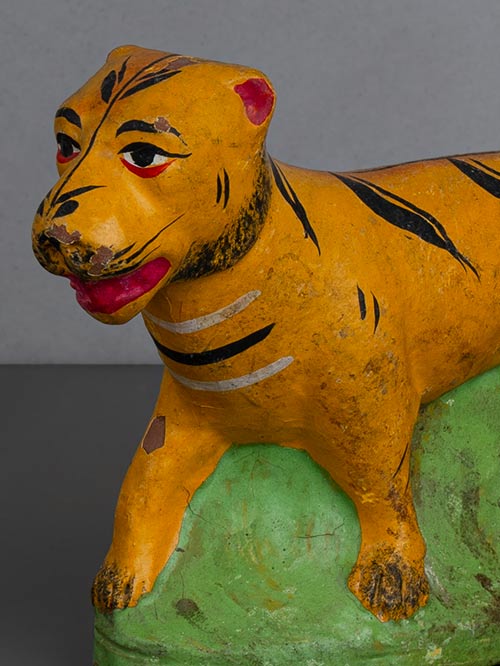
Tamil Nadu
polychromed terracotta
A charming Tiger Vahana with lovely patina and extensive polychroming. The tiger is depicted mid-stride walking within tall foliage. Terracotta toys were used as ritual display in temples during important festivals such as Holi, Shivaratri and Durga Puja.
The tiger is the vehicle of, and sacred to, the Hindu goddess, Durga. From a certain perspective she is India’s Mother Nature, for she is the deification of Energy. Her consort, Shiva, sometimes evoked as Shambo, wears a tiger skin to indicate that he is beyond the bounds of the natural world.
Size (cms): 12(H) x 16(W) x 6.5(D)
Size (inches): 4.5(H) x 6.5(W) x 2.5(D)
-
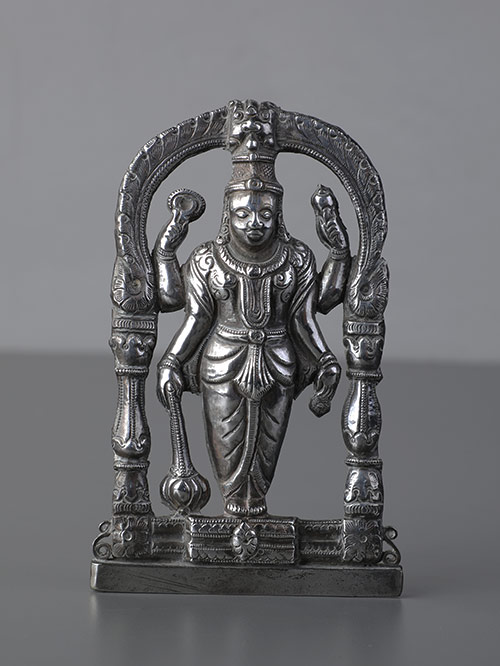
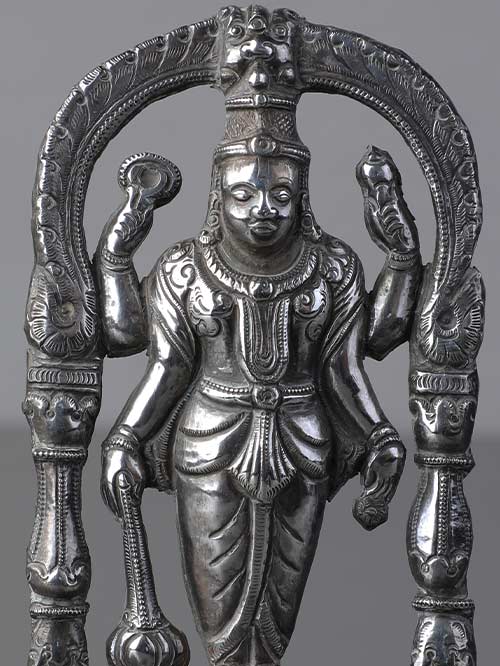
Maharashtra
silver
A finely cast and decorated standing figure of Vishnu. Four-armed, the figure carries a gada (mace), chakra (disc) conch and lotus. He wears multiple ear and neck ornaments and a tall crown surmounted by a Kirtimukha which forms a ritual arch around the figure. Vishnu means ‘All Pervader’, or taking many forms’ is one of the most important Hindu deities along with Shiva and Brahma. He is the sustainer of the universe and sometimes descends to earth assuming various forms (avatars) to redress the balance between good and evil, and hence is known as the Preserver.
Size (cms): 13.5(H) x 8.5(W) x 5(D)
Size (inches): 5.5(H) x 3.5(W) x 2(D)