“Articulated Puppet” has been added to your cart.
View cart
-
Tamil Nadu
Wood, extensively polychromed
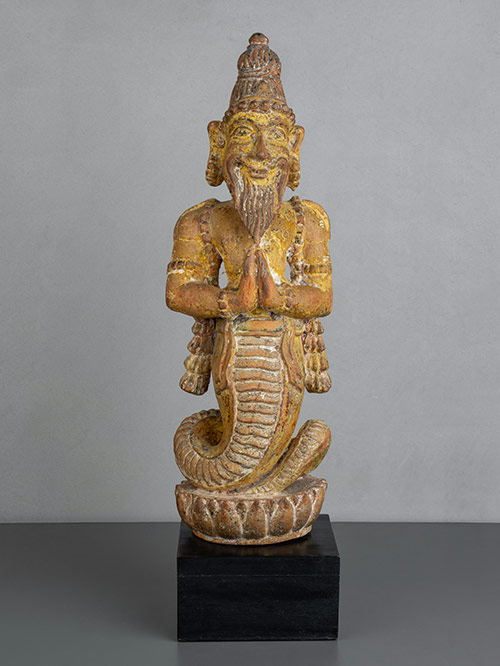
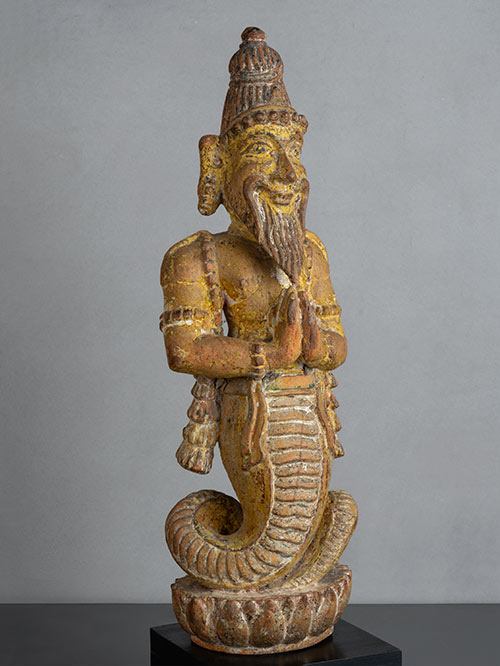
A fine and rare polychromed and patinated figure of Patanjali. According to legend, Patanjali is the incarnation of the Serpent-God Adisesa, who was moved to become Shiva’s follower after witnessing his cosmic dance. Adisesa wanted to experience the dance, so he was born on Earth with half his body as a snake and was named Patanjali, which means “fallen into folded hands”. When represented in this aspect, Patanjali has the lower body of a snake and his hands are folded in Anjalimudra.
He is most famously known as the compiler of the “Yoga Sutras,” a foundational text on the theory and practice of yoga. The “Yoga Sutras” provide a comprehensive framework for understanding the philosophy and practice of yoga, encompassing principles such as self-discipline (tapas), self-study (svadhyaya), and devotion to the divine (ishvara pranidhana).
Size (cms): 60(H) x 17(W) x 16(D)
Size (inches): 23.5(H) x 6.5(W) x 6.5(D)
-
Northern Kerala (South India)
Wood
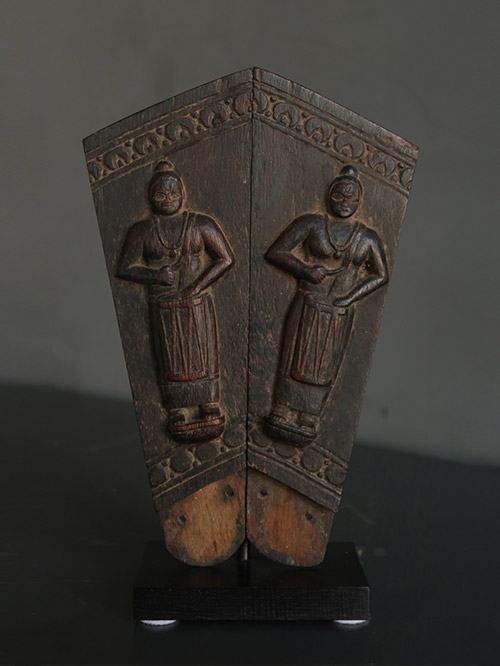
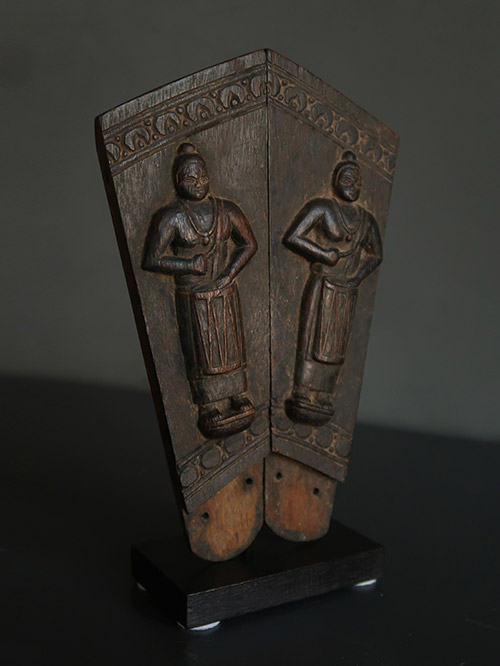
A fine pair of wedge shaped panels depicting a pair of musicians. Carved in low relief, the bare chested musicians wear dhotis and a simple necklace and have their hair tied up into buns. Conspicuously drawn on their foreheads are namams which are identification marks of Sri Vaishnavites. Their faces are locked in concentration as they play the chanda (cylindrical drum) that is strung over their shoulders. A band of geometric patterns frames the top and bottom of the panels.
Wedged shaped panels such as these would have been loosely strung together to form a ritual headpiece that would have been worn by the chief performer in ceremonial dances associated with temple festivals. The headpiece is boldly conceived , with a central figure of Gaja Laxmi, carved in high relief, seated on a lotus being lustrated by two elephants flanking her. Ten processional figures of musicians and attendants carrying staffs, drums, cymbals, trumpets etc. would have been depicted in low-relief on either side of the central motif.
Size(cms): 26 (H) x 15 (W) x 7 (D)
Size(inches): 10.2 (H) x 5.9 (W) x 2.7 (D)
-
South India
Wood
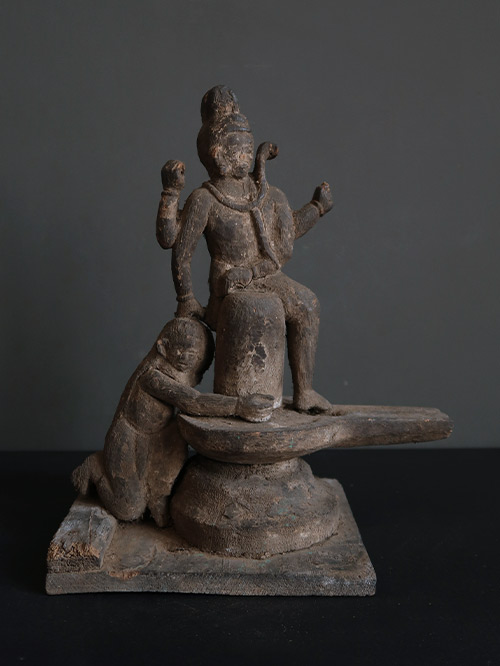
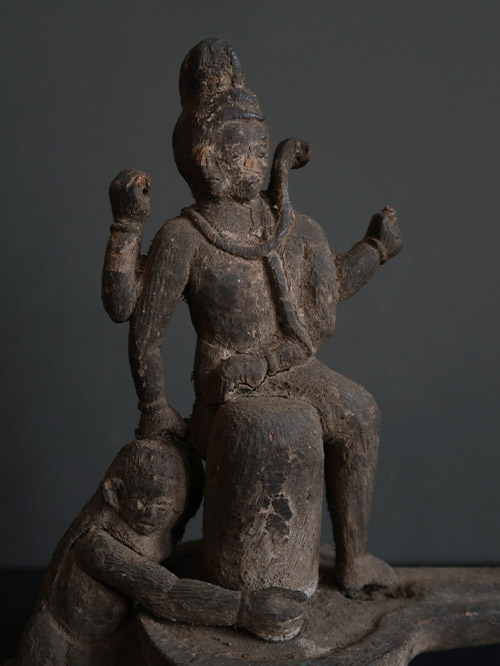
An unusual group of figures depicting Markandeya embraces a linga. Four-armed Shiva is depicted emerging from the linga, splitting it apart, and with his right foot resting on the yoni. This incident is believed to have happened at Triprangode, Kerala where Lord Shiva appears and kills Yama when the latter appears to take the life of Markandeya who is one of Shiva’s ardent devotees.
Size (cms): 28 (H) x 23 (W) x 16 (D)
Size (inches): 11 (H) x 9 (W) x 6.3 (D)
-
Maharashtra
Wood
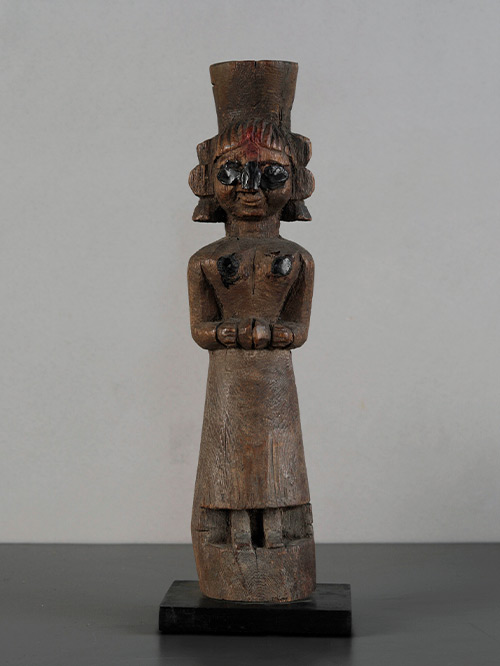
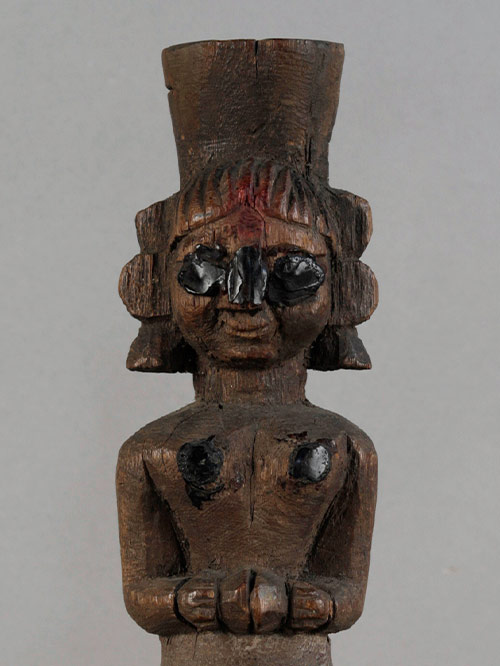
A beautiful votive doll with its hands pressed in anjali mudra, a gesture of greeting and prayer. These small figures carved in wood, usually representing worshipping women, but also female water carriers, mothers, or pregnant women are simple in design, yet it is this implied simplicity that makes these figures attractive. They take various forms, triangular, rectangular, round or stepped. Often only the front of the sculptures are carved whereas the rears maybe left untreated. Often statuettes miss a nose, ears or arms. Many of the faces have been worn down from use, to a point where they reveal no detail.
These small figures were used for devotional purposes within the home, placed there as votive offerings to the Goddess Maulli/Mariai. Mauli is a powerful folk deity that protects against illness such as smallpox and cholera. But at the same time, neglecting her inflicts her wrath. She also takes the role of a fertility goddess to whom childless women seek respite. Figures of the Goddess are worshipped with turmeric, some red kunkum and oil which is daubed on her forehead.
Size (cms): 31.5(H) x 10.5(W) x 8(D)
Size (inches): 12.5(H) x 4(W) x 3(D)
-
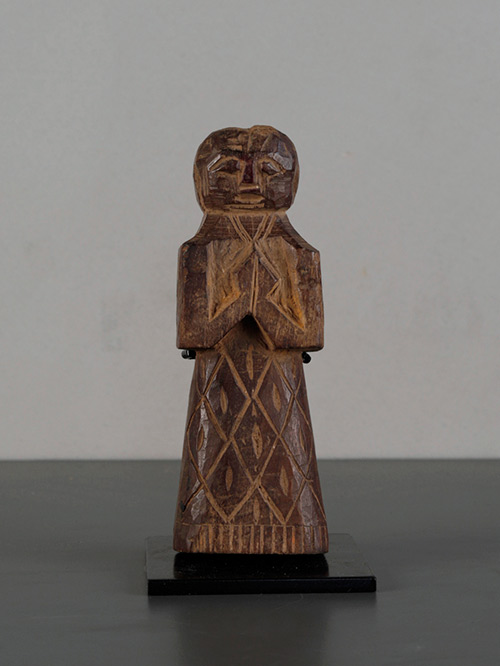
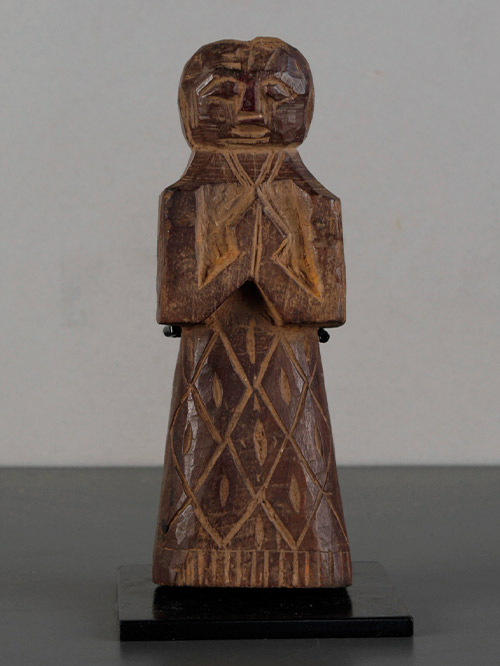
Maharashtra
Wood
A beautiful votive doll with its hands pressed in anjali mudra, a gesture of greeting and prayer. These small figures carved in wood, usually representing worshipping women, but also female water carriers, mothers, or pregnant women are simple in design, yet it is this implied simplicity that makes these figures attractive. They take various forms, triangular, rectangular, round or stepped. Often only the front of the sculptures are carved whereas the rears maybe left untreated. Often statuettes miss a nose, ears or arms. Many of the faces have been worn down from use, to a point where they reveal no detail.
These small figures were used for devotional purposes within the home, placed there as votive offerings to the Goddess Maulli/Mariai. Mauli is a powerful folk deity that protects against illness such as smallpox and cholera. But at the same time, neglecting her inflicts her wrath. She also takes the role of a fertility goddess to whom childless women seek respite. Figures of the Goddess are worshipped with turmeric, some red kunkum and oil which is daubed on her forehead.
Size (cms): 18.5(H) x 9(W) x 9(D)
Size (inches): 7.5(H) x 3.5(W) x 3.5(D)
-
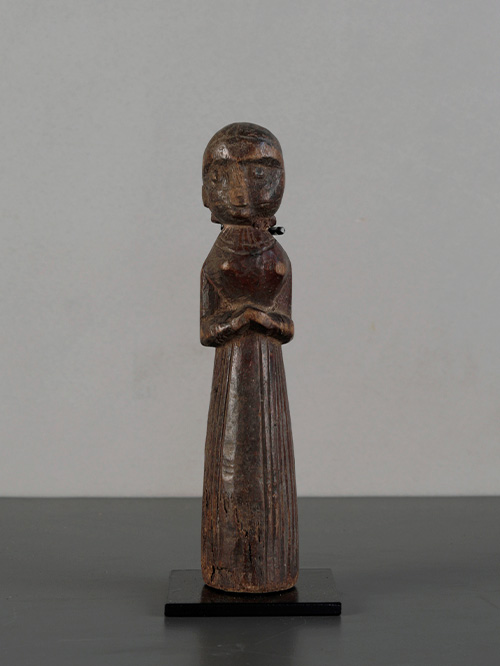
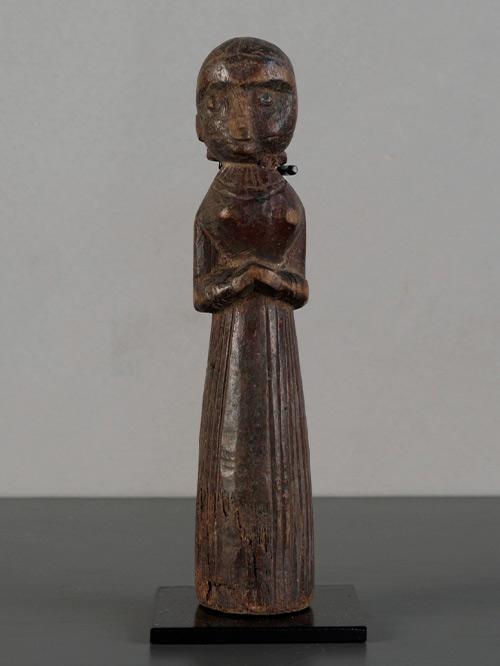
Maharashtra
Wood
A beautiful votive doll with its hands pressed in anjali mudra, a gesture of greeting and prayer. These small figures carved in wood, usually representing worshipping women, but also female water carriers, mothers, or pregnant women are simple in design, yet it is this implied simplicity that makes these figures attractive. They take various forms, triangular, rectangular, round or stepped. Often only the front of the sculptures are carved whereas the rears maybe left untreated. Often statuettes miss a nose, ears or arms. Many of the faces have been worn down from use, to a point where they reveal no detail.
These small figures were used for devotional purposes within the home, placed there as votive offerings to the Goddess Maulli/Mariai. Mauli is a powerful folk deity that protects against illness such as smallpox and cholera. But at the same time, neglecting her inflicts her wrath. She also takes the role of a fertility goddess to whom childless women seek respite. Figures of the Goddess are worshipped with turmeric, some red kunkum and oil which is daubed on her forehead.
Size (cms): 22(H) x 7.5(W) x 7.5(D)
Size (inches): 8.5(H) x 3(W) x 3(D)
-
Maharashtra
Wood
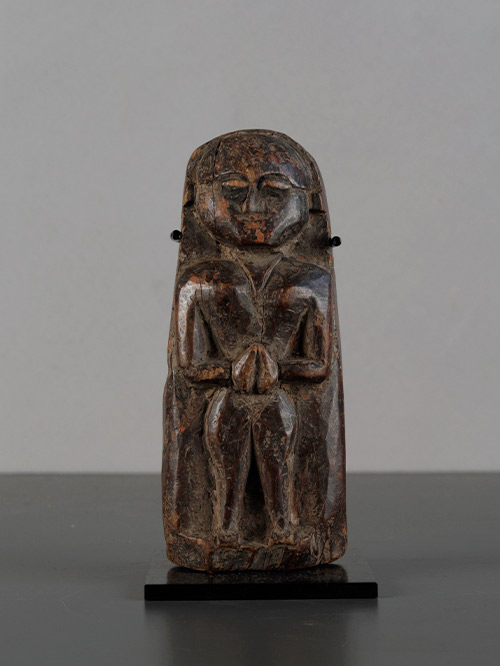
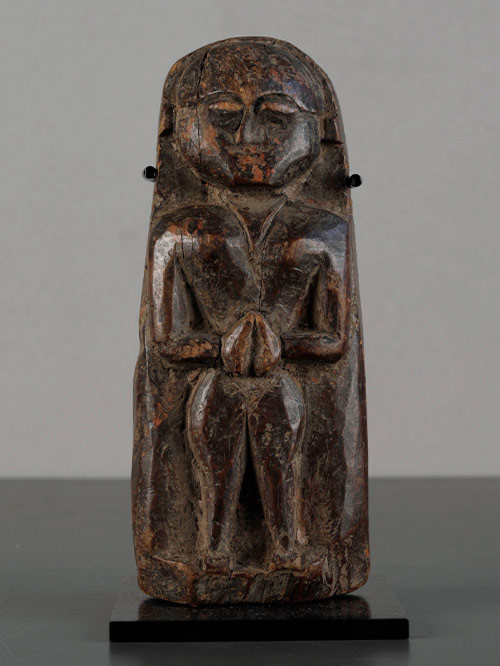
A beautiful votive doll with its hands pressed in anjali mudra, a gesture of greeting and prayer. These small figures carved in wood, usually representing worshipping women, but also female water carriers, mothers, or pregnant women are simple in design, yet it is this implied simplicity that makes these figures attractive. They take various forms, triangular, rectangular, round or stepped. Often only the front of the sculptures are carved whereas the rears maybe left untreated. Often statuettes miss a nose, ears or arms. Many of the faces have been worn down from use, to a point where they reveal no detail.
These small figures were used for devotional purposes within the home, placed there as votive offerings to the Goddess Maulli/Mariai. Mauli is a powerful folk deity that protects against illness such as smallpox and cholera. But at the same time, neglecting her inflicts her wrath. She also takes the role of a fertility goddess to whom childless women seek respite. Figures of the Goddess are worshipped with turmeric, some red kunkum and oil which is daubed on her forehead.
Size (cms): 17.5(H) x 9(W) x 9(D)
Size (inches): 7(H) x 3.5(W) x 3.5(D)
-
Maharashtra
Wood
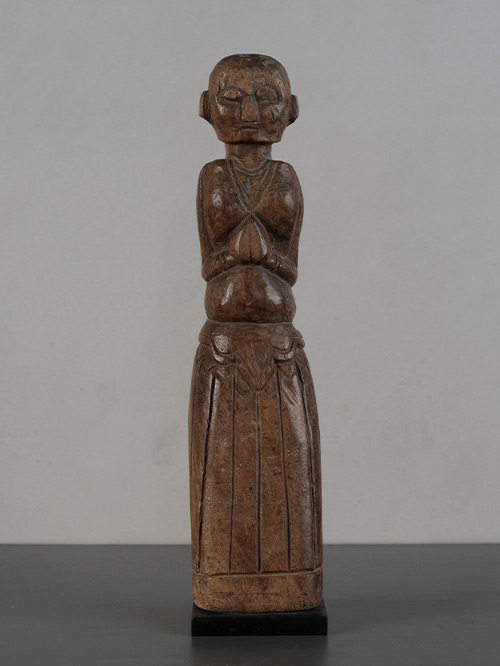
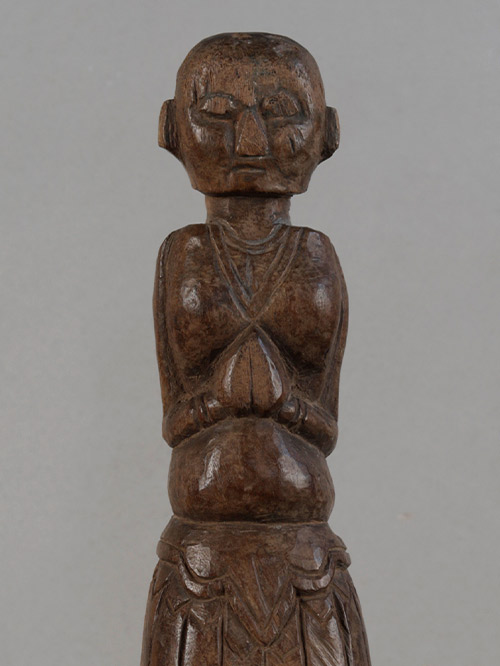
A beautiful votive doll with its hands pressed in anjali mudra, a gesture of greeting and prayer. These small figures carved in wood, usually representing worshipping women, but also female water carriers, mothers, or pregnant women are simple in design, yet it is this implied simplicity that makes these figures attractive. They take various forms, triangular, rectangular, round or stepped. Often only the front of the sculptures are carved whereas the rears maybe left untreated. Often statuettes miss a nose, ears or arms. Many of the faces have been worn down from use, to a point where they reveal no detail.
These small figures were used for devotional purposes within the home, placed there as votive offerings to the Goddess Maulli/Mariai. Mauli is a powerful folk deity that protects against illness such as smallpox and cholera. But at the same time, neglecting her inflicts her wrath. She also takes the role of a fertility goddess to whom childless women seek respite. Figures of the Goddess are worshipped with turmeric, some red kunkum and oil which is daubed on her forehead.
Size (cms): 32(H) x 7.5(W) x 7(D)
Size (inches): 12.5(H) x 3(W) x 3(D)
-
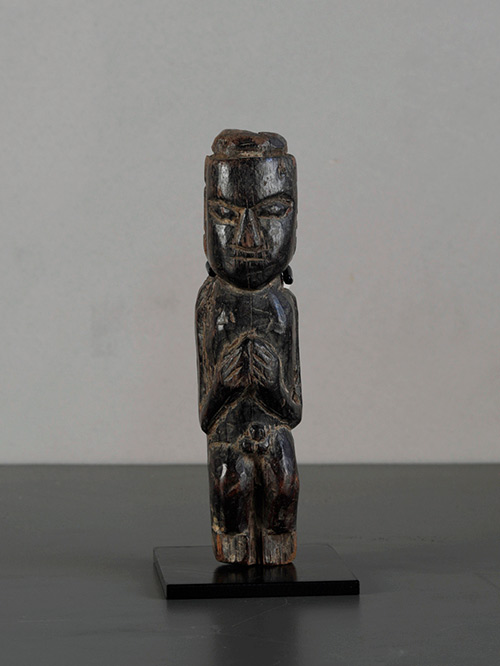
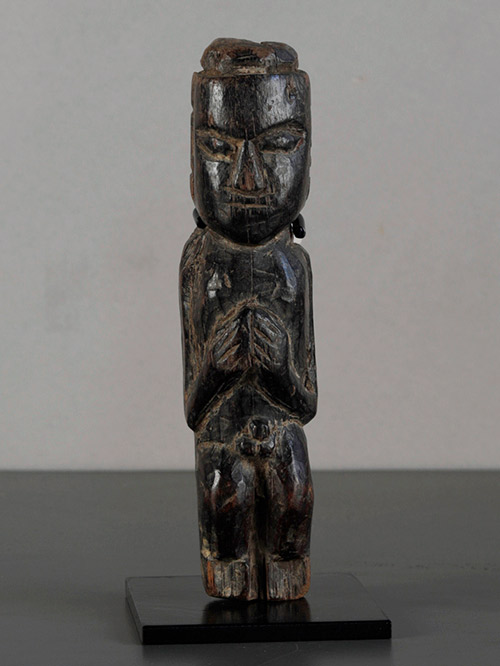
Maharashtra
Wood
A beautiful votive doll with its hands pressed in anjali mudra, a gesture of greeting and prayer. These small figures carved in wood, usually representing worshipping women, but also female water carriers, mothers, or pregnant women are simple in design, yet it is this implied simplicity that makes these figures attractive. They take various forms, triangular, rectangular, round or stepped. Often only the front of the sculptures are carved whereas the rears maybe left untreated. Often statuettes miss a nose, ears or arms. Many of the faces have been worn down from use, to a point where they reveal no detail.
These small figures were used for devotional purposes within the home, placed there as votive offerings to the Goddess Maulli/Mariai. Mauli is a powerful folk deity that protects against illness such as smallpox and cholera. But at the same time, neglecting her inflicts her wrath. She also takes the role of a fertility goddess to whom childless women seek respite. Figures of the Goddess are worshipped with turmeric, some red kunkum and oil which is daubed on her forehead.
Size (cms): 18(H) x 8(W) x 8(D)
Size (inches): 7(H) x 3(W) x 3(D)
-
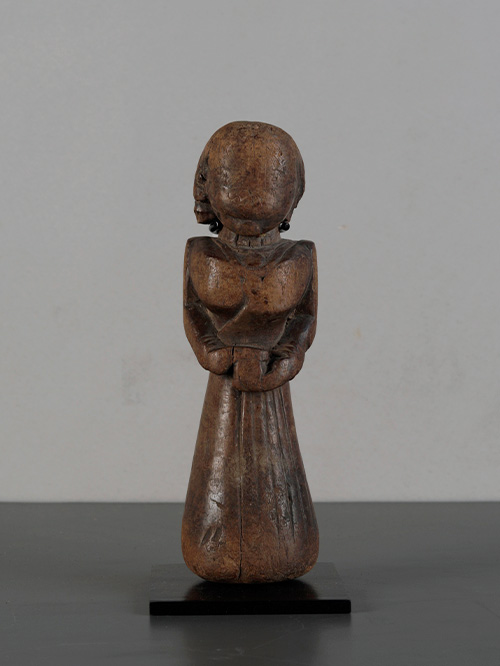
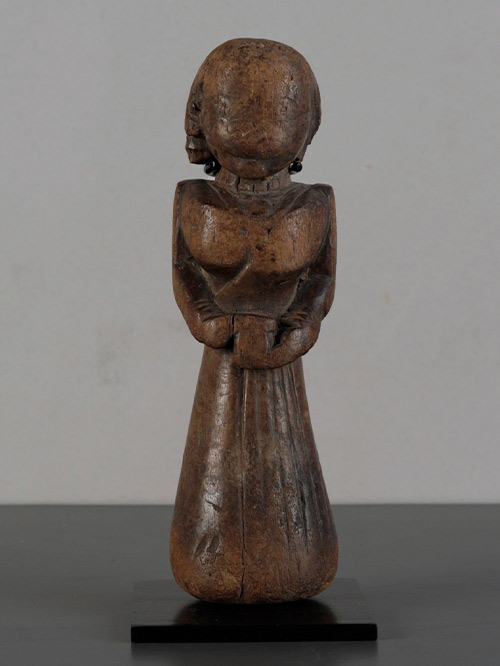
Maharashtra
Wood
A patinated votive doll with its hands pressed in anjali mudra, a gesture of greeting and prayer. These small figures carved in wood, usually representing worshipping women, but also female water carriers, mothers, or pregnant women are simple in design, yet it is this implied simplicity that makes these figures attractive. They take various forms, triangular, rectangular, round or stepped. Often only the front of the sculptures are carved whereas the rears maybe left untreated. Often statuettes miss a nose, ears or arms. Many of the faces have been worn down from use, to a point where they reveal no detail.
These small figures were used for devotional purposes within the home, placed there as votive offerings to the Goddess Maulli/Mariai. Mauli is a powerful folk deity that protects against illness such as smallpox and cholera. But at the same time, neglecting her inflicts her wrath. She also takes the role of a fertility goddess to whom childless women seek respite. Figures of the Goddess are worshipped with turmeric, some red kunkum and oil which is daubed on her forehead.
Size (cms): 22.5(H) x 9(W) x 9(D)
Size (inches): 9(H) x 3.5(W) x 3.5(D)
-
Maharashtra
Wood
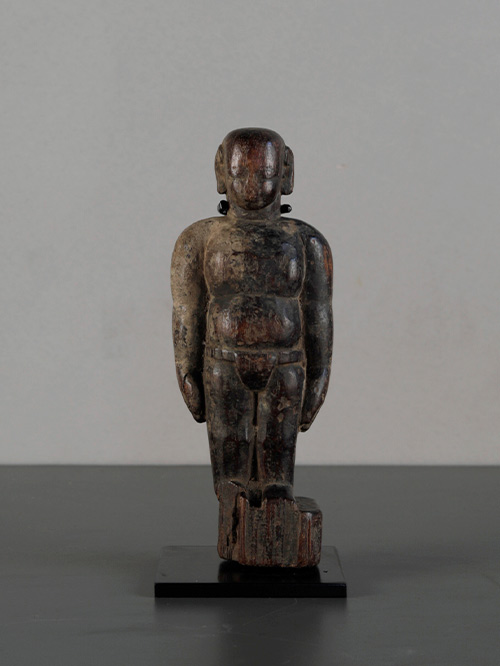
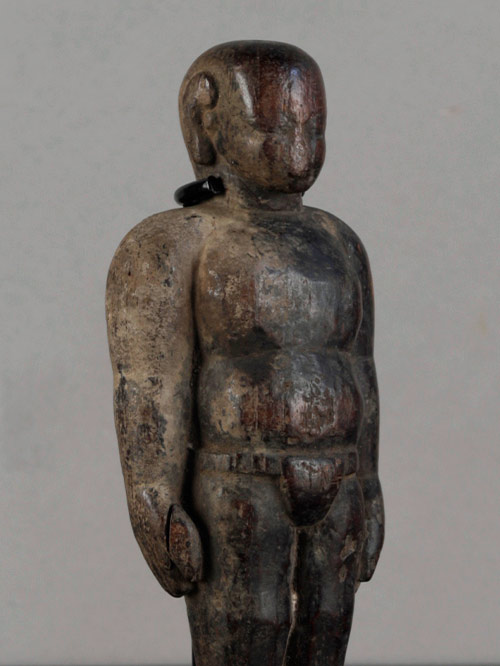
An unusual wooden doll depicting a portly man standing at attention.
These small figures carved in wood, usually representing worshipping women, but also female water carriers, mothers, or pregnant women are simple in design, yet it is this implied simplicity that makes these figures attractive. They take various forms, triangular, rectangular, round or stepped. Often only the front of the sculptures are carved whereas the rears maybe left untreated. Often statuettes miss a nose, ears or arms. Many of the faces have been worn down from use, to a point where they reveal no detail.
These small figures were used for devotional purposes within the home, placed there as votive offerings to the Goddess Maulli/Mariai. Mauli is a powerful folk deity that protects against illness such as smallpox and cholera. But at the same time, neglecting her inflicts her wrath. She also takes the role of a fertility goddess to whom childless women seek respite. Figures of the Goddess are worshipped with turmeric, some red kunkum and oil which is daubed on her forehead.
Size (cms): 19(H) x 8(W) x 8(D)
Size (inches): 7.5(H) x 3(W) x 3(D)
-
Maharashtra/Karnataka
Wood polychromed
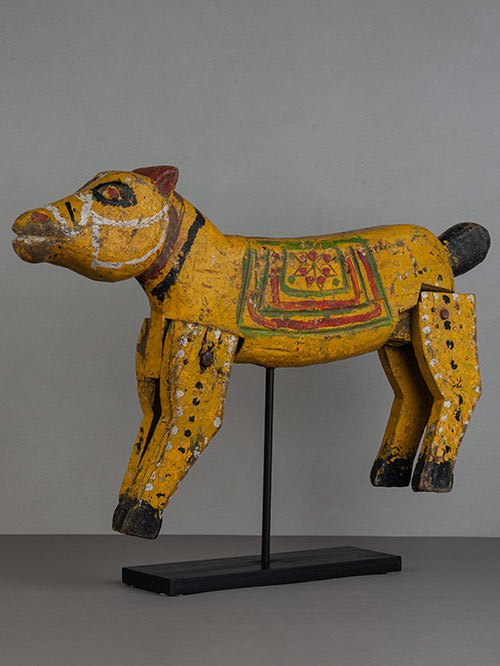
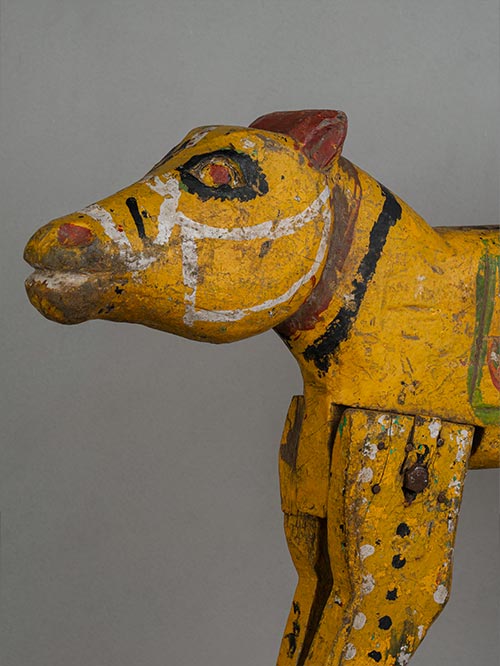
An attractive folk carousel animal in the shape of a dog with original polychroming.
According to Hindu mythology, the dog was originally created by Brahma who then asked him to find and serve the greatest creature on earth. The dog, understandably, settled upon the elephant as his master. However, when he was rebuked for barking at night, lest he attract the attention of a lion, he realised he had made the wrong choice and decided to serve the lion instead. But the lion in turn complained that his bark would attract a hunter. Finally the dog found its right master, the hunter, who abided his barking without fear of a more powerful creature.
Size (cms): 50(H) x 70(W) x 10(D)
Size (inches): 19.5(H) x 27.5(W) x 4(D)
-


Maharashtra/Karnataka
Wood polychromed
An attractive folk carousel animal in the shape of a horse with original polychroming.
The horse played a pivotal role in establishing the supremacy of kings, as demonstrated, for instance by the great horse sacrifice, the Ashvamedha, which might have been established in the course of the Vedic period. Equestrian motifs appear prominently in Indian art, for example in Orissan sculpture of the 12th and 13th centuries, and in that of the late Vijaynagara and Nayak periods (early 16th to early 18th century) in southern India. There is a branch of literature specialising in the training of horses, which contains detailed passages on colouring, proportions, gait, auspicious and inauspicious marks and lists of appropriate names for horses.
Size (cms): 54.5(H) x 71.5(W) x 10.5(D)
Size (inches): 21.5(H) x 28(W) x 4(D)
-
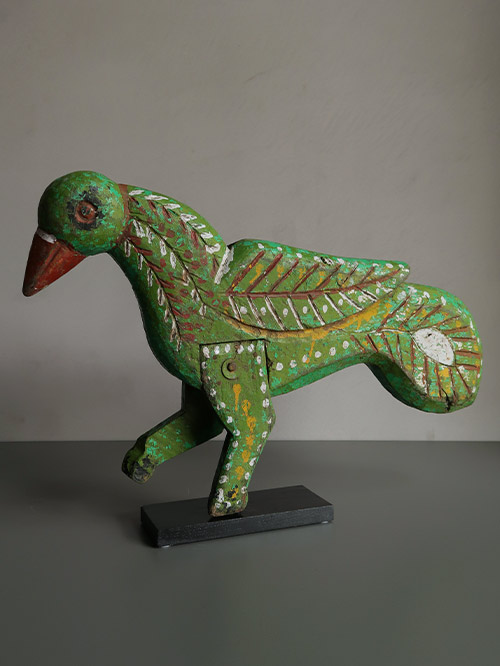
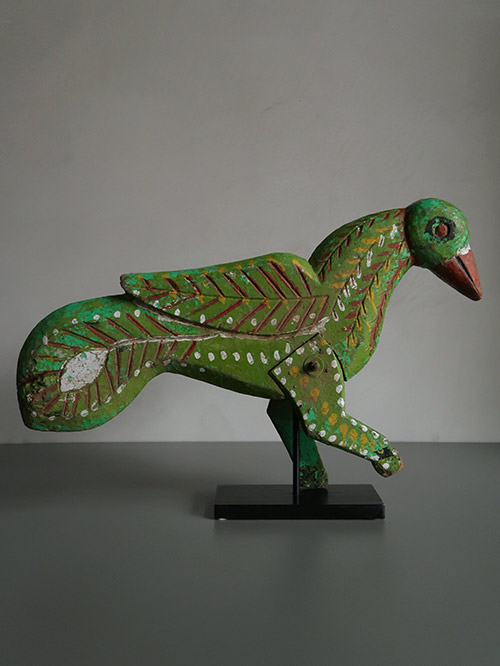
Maharashtra/Karnataka
Wood polychromed
An attractive folk carousel animal in the shape of a parrot with original polychroming. The parrot is the vehicle (vahana) of Kama – the god of love. Generally depicted riding on a parrot, Kama is depicted armed with a bow made of sugar cane (ikshukodanda) bearing a string formed by a row of buzzing bees, five flowertipped arrows, symbolizing the five senses, and on his banner the Makara, an aquatic monster.
Size (cms): 47.5(H) x 70(W) x 10(D)
Size (inches): 18.5(H) x 27.5(W) x 4(D)
-
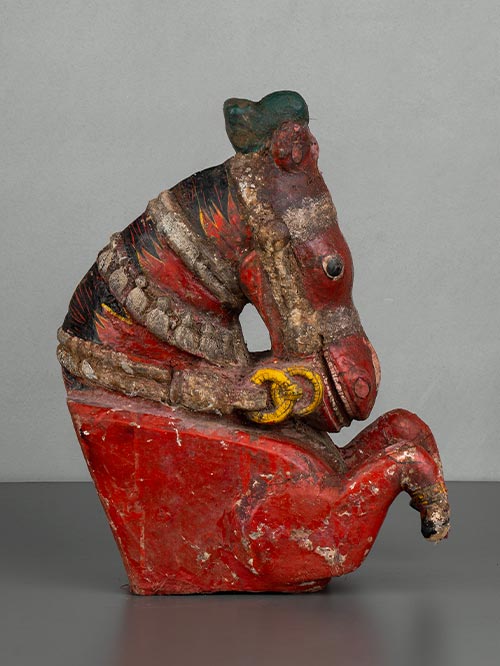
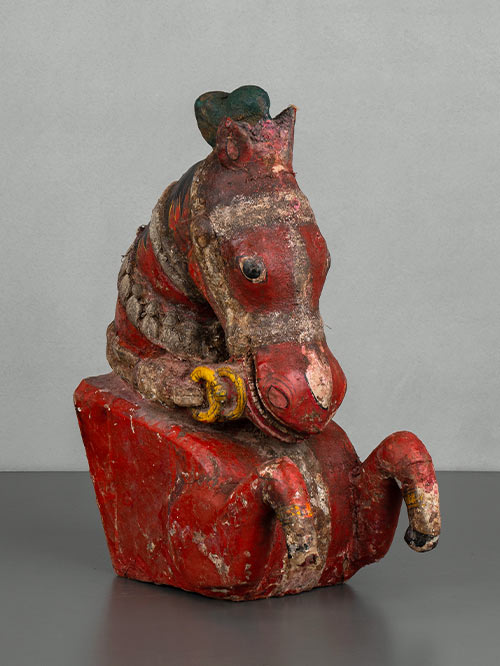
Karnataka
Wood polychromed
A delightful, richly polychromed horse vahana that would have been a part of a processional figure depicting the Goddess Durga. Every year, during Navratri, processional images of the Goddess are carried in evocative ceremonies. Depending on the day of the festival, her vahana, the vehicle on which she rides changes, with each of her vehicles holding a different and unique significance. The horse she rides here signifies her readiness for battle.
The horse played a pivotal role in establishing the supremacy of kings, as demonstrated, for instance by the great horse sacrifice, the Ashvamedha, which might have been established in the course of the Vedic period. Equestrian motifs appear prominently in Indian art, for example in Orissan sculpture of the 12th and 13th centuries, and in that of the late Vijaynagara and Nayak periods (early 16th to early 18th century) in southern India. There is a branch of literature specialising in the training of horses, which contains detailed passages on colouring, proportions, gait, auspicious and inauspicious marks and lists of appropriate names for horses.
Size (cms): 40(H) x 31(W) x 16(D)
Size (inches): 15.5(H) x 12(W) x 6.5(D)
-
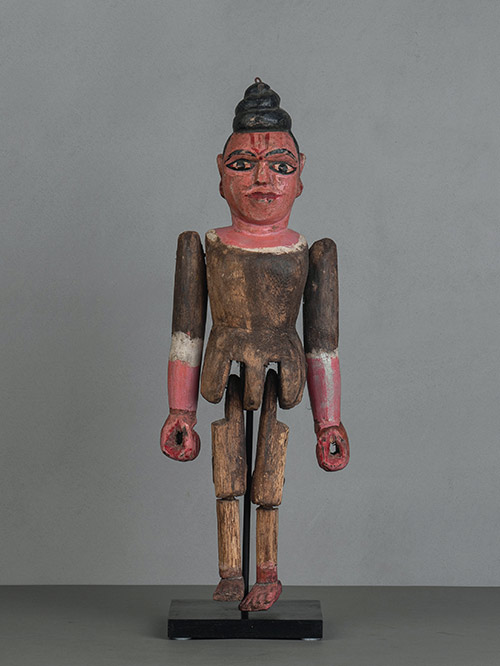

Orissa
Wood with traces of polychroming
An articulated wooden puppet from Orissa in the style of Kundhei. This art is performed by puppeteers in groups that travel from village to village performing shows. Kundhei is considered as a dying art form as performers turn to more sustainable forms of income. The costumes of Kundhei resemble those worn by actors of the Jatra traditional theatre.
Puppetry in India can be traced back as early as the Indus Valley civilisation, and has always had a vibrant and ancient tradition of using string puppets or marionettes. String puppets were traditionally made of wood, or wire, or cloth stuffed with cotton, rags or saw dust. Themes for puppet theatre are mostly based on epics like the Ramayana and Mahabharata but also include local myths and legends. Puppetry is popular in various state, and each state has slightly varies styles and themes.
Size (cms): 57(H) x 19.5(W) x 15(D)
Size (inches): 22.5(H) x 7.5(W) x 6(D)