“Mukha Linga with Naga” has been added to your cart.
View cart
-
Nepal
Wood, hide and cane
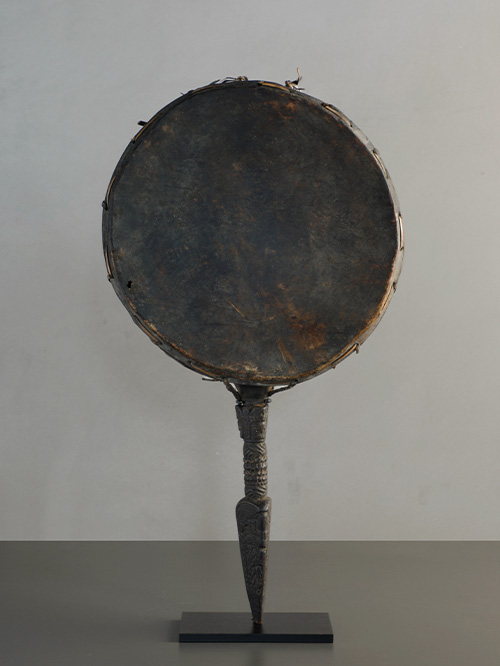
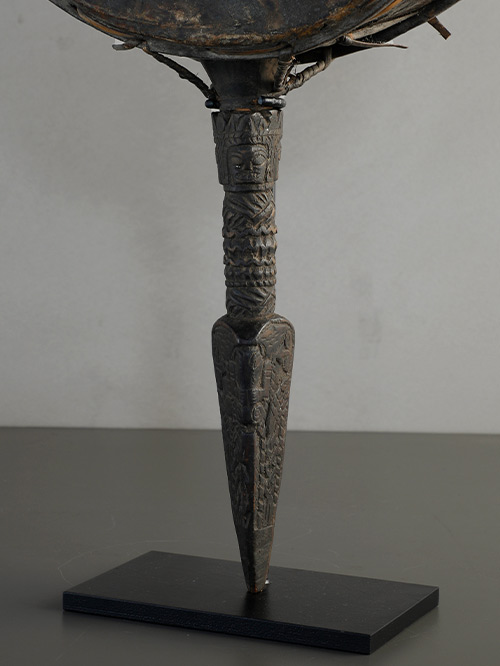
The dhyangro is a double-headed frame drum used by jhakris (tribal shamans), especially those of the Magars, the Kirati, and the Tamang, in the Middle Hills region of the Himalayas in Nepal. It is considered an ancient tool of magic and has been used by shamans for centuries to enter a trance and channel benevolent helping deities. The drum is played by holding the handle in the left hand, with the frame level with the face, and striking the outer head with the right hand holding a curved stick.
The drum has hide drumheads stretched over a circular wooden rim, secured with rattan strips. The handle is elongated and carved to resemble a phurba or esoteric dagger found in Tibetan Buddhist ritual. The handle features ornate relief carving depicting three deity heads and many shamanistic symbols, such as endless knots and caduceus-like symbols, that encircle it.
Size (cms): 65(H) x 35(W) x 14(D)
Size (inches): 25.5(H) x 14(W) x 5.5(D)
-

Karnataka (South India)
brass
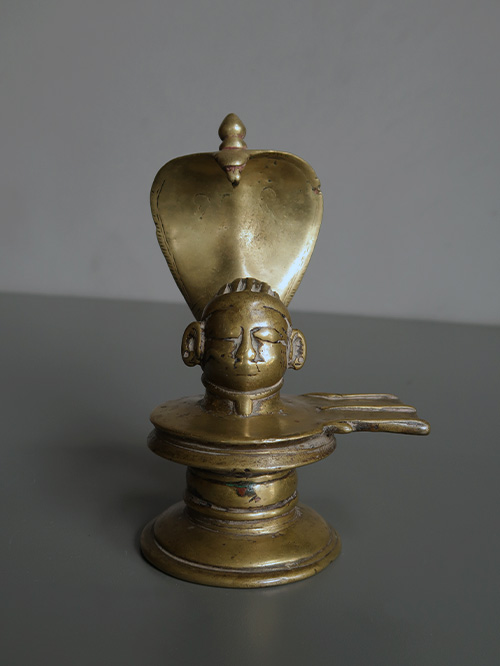
A finely cast Mukha lingam with a serpent canopy that extends overhead.
The Lingam is an abstract or aniconic representation of the Hindu deity Shiva in Shaivism. Lingams are shaped like a pillar with a round top and were made of stone, wood or metal.Eventually, during the Kushan period (1st century to 3rd century CE) in north India, human faces came to be added to the lingams, hence the name mukhalinga. This object marks the presence of the invisible transcendental reality of Shiva, the Hindu god of destruction.
Size (cms): 16(H) x 10(W) x 9(D)
Size (inches): 6.5(H) x 4(W) x 3.5(D)
-
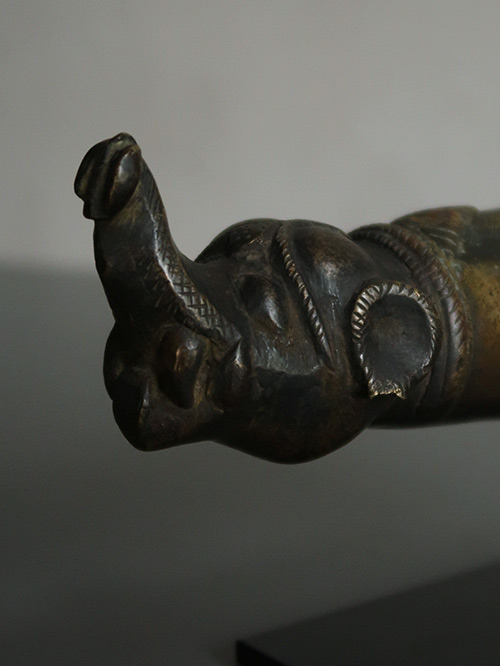
Karnataka
Brass alloy
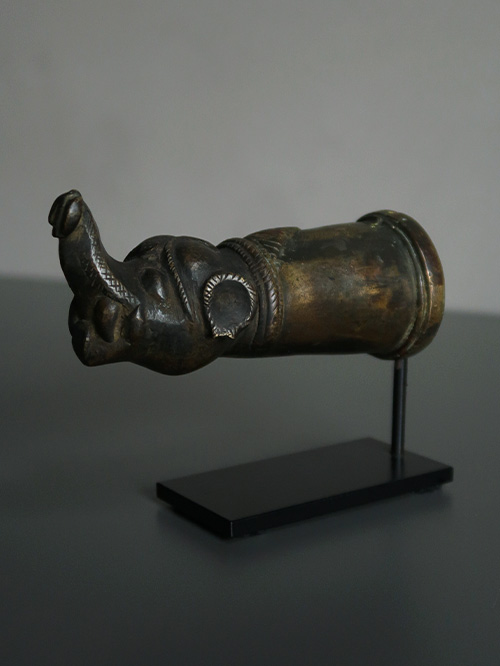
A diminutive palanquin pole finial taking the sculptural form of a makara head with large pointed ears, beady eyes and a gaping mouth. The emotive expression of the makara, with his open mouth is powerful yet unthreatening, underlying its protective function, benign in character though capable of potential ferocity when attacked. It is almost as if he is showing off, displaying his power and status, probably reflecting that of the palanquin’s grand passenger.
Palanquins or sedan chairs were used throughout India, the larger ones to transport people and the smaller ones for religious deities to be taken around the temple complex on festival days. The present example is from the latter category. It was fitted to the wooden forward pole of the palanquin; the rear pole was usually covered with a simple metal cover or cylinder.
Size (cms): 13(H with stand) x 14.5(W) x 6.5(D)
Size (inches): 5(H with stand) x 5.5(W) x 2.5(D)