Filter products Showing 1 - 16 of 18 results
Sort By
Filter By Style
Show Per Page
  • group of munjasgroup of munjas

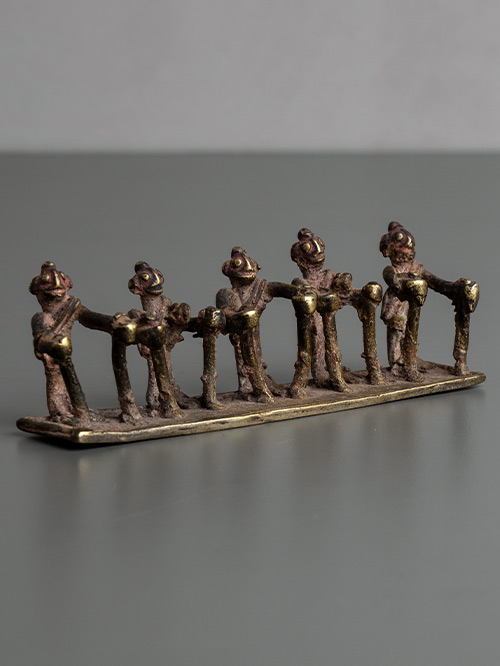
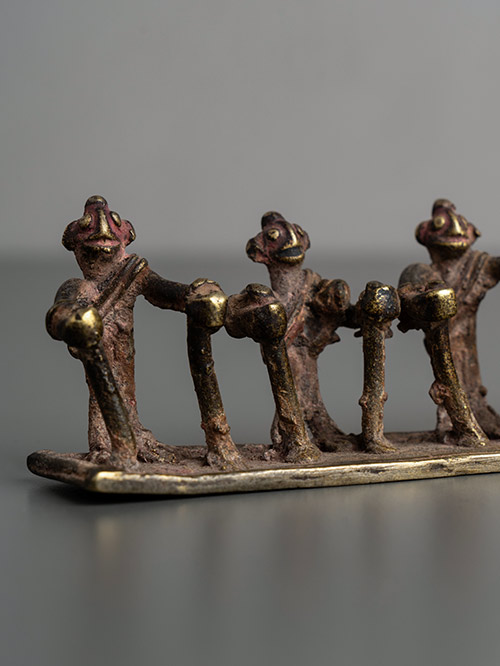
    Group of Munjas

    Maharashtra

    Brass alloy

    This folk bronze depicts a group of munjas (spirits) represented as five men, each holding a pair of sticks and adorned with a yajnopavita (sacred thread). These figures symbolise young men who tragically passed away at the age when they had just begun their studies. To honour their memory and appease their spirits, such figurines are placed on household altars. Through ritual ablution and ceremonies, these ghosts are believed to be transformed into pitra (protective ancestors) who safeguard the family.

    Size (cms): 5(H) x 14.5(W) x 3(D)
    Size (inches):
    2(H) x 5.5(W) x 1(D)

  • Mukha Linga with Naga

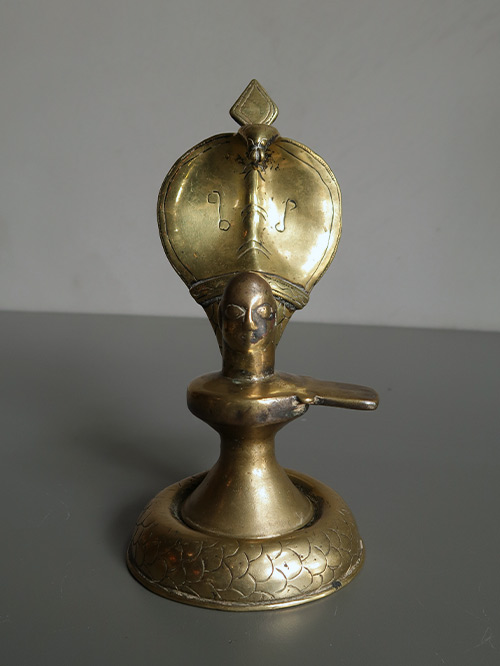
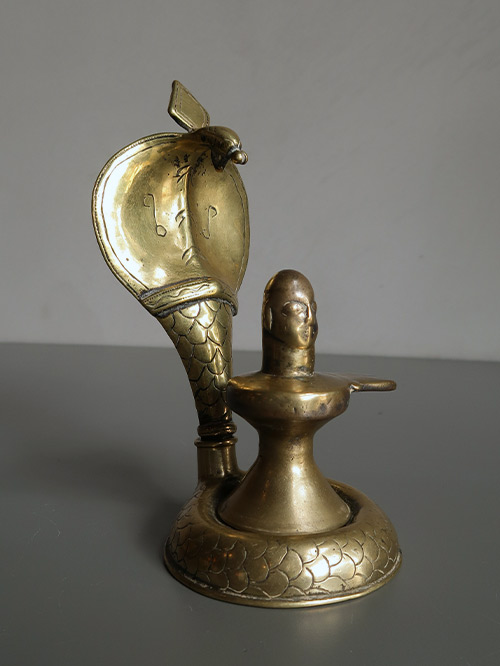
    Mukha Linga with Naga

    Karnataka (South India)

    brass

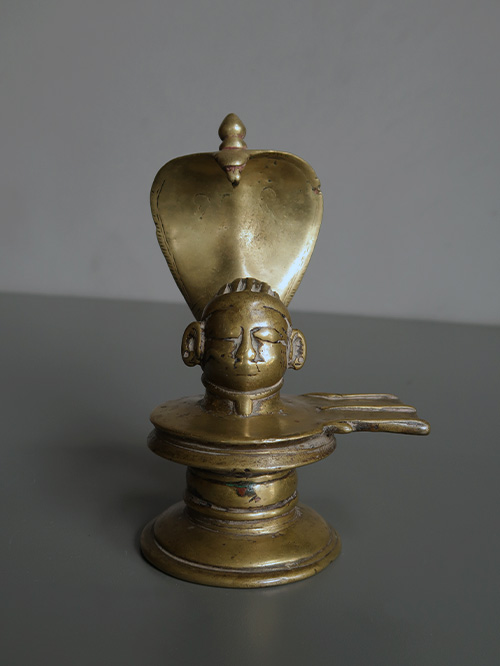
    A finely cast lingam resting on the patterned coils of the serpent Vasuki which forms a canopy overhead.

    The Lingam is an abstract or aniconic representation of the Hindu deity Shiva in Shaivism. Lingams are shaped like a pillar with a round top and were made of stone, wood or metal.Eventually, during the Kushan period (1st century to 3rd century CE) in north India, human faces came to be added to the lingams, hence the name mukhalinga. This object marks the presence of the invisible transcendental reality of Shiva, the Hindu god of destruction.

    Size (cms): 19(H) x 6.5(W) x 9(D)
    Size (inches): 7.5(H) x 2.5(W) x 3.5(D)

  • mukha linga with naga (copy)mukha linga with naga (copy)

    Mukha Linga with Naga

    Karnataka (South India)

    brass

    A finely cast Mukha lingam with a serpent canopy that extends overhead.

    The Lingam is an abstract or aniconic representation of the Hindu deity Shiva in Shaivism. Lingams are shaped like a pillar with a round top and were made of stone, wood or metal.Eventually, during the Kushan period (1st century to 3rd century CE) in north India, human faces came to be added to the lingams, hence the name mukhalinga. This object marks the presence of the invisible transcendental reality of Shiva, the Hindu god of destruction.

    Size (cms): 16(H) x 10(W) x 9(D)
    Size (inches): 6.5(H) x 4(W) x 3.5(D)

  • Mukhalingam

    Mukhalingam

    Karnataka (South India)

    brass

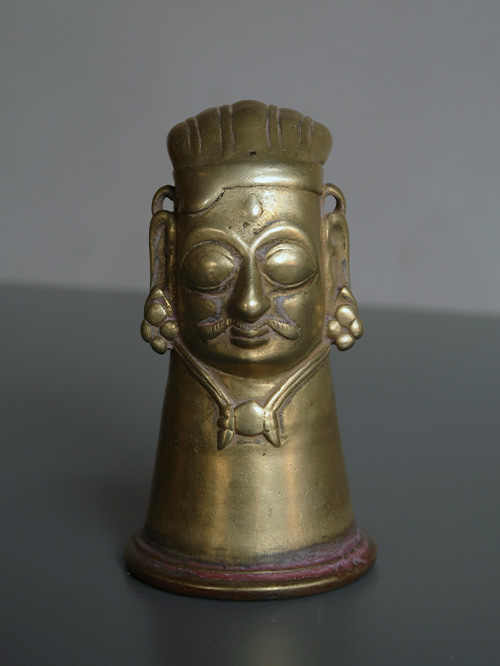
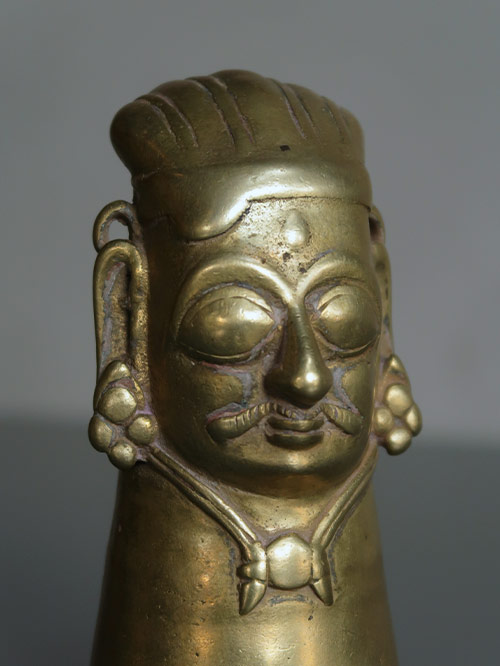
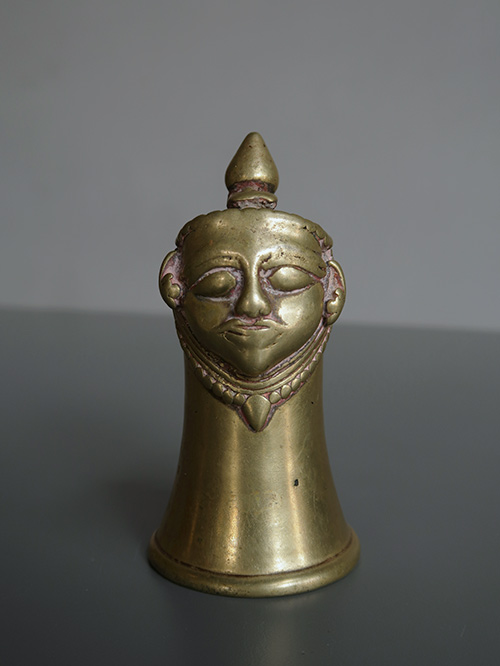
    Shiva is one of the three principal deities of Hinduism. He is labelled the ‘destroyer’ with the Trimurti, Hinduism’s trinity which includes Brahma and Vishnu. While sometimes depicted iconically, he is usually worshipped in the aniconic from of a lingam. The lingam is shaped like a pillar with a round top and can be made of stone, wood or metal. Mukha-linga signifies a visage or face on a metallic, cylindrical casting used to cover a stone lingam. The cover is thought to protect the viewer from the harm that could occur on visualization of the linga, especially one with eyes painted on its surface, which is believed to energize the figure. The metallic visage iconically depicts Shiva, wearing his characteristic moustache, earrings and matted hair.

    Size (cms): 14.5(H) x 7.7(Diam)
    Size (inches):
    5.5(H) x 3(Diam)

  • Mukhalingam

    Mukhalingam

    Karnataka (South India)

    brass

    Shiva is one of the three principal deities of Hinduism. He is labelled the ‘destroyer’ with the Trimurti, Hinduism’s trinity which includes Brahma and Vishnu. While sometimes depicted iconically, he is usually worshipped in the aniconic from of a lingam. The lingam is shaped like a pillar with a round top and can be made of stone, wood or metal. Mukha-linga signifies a visage or face on a metallic, cylindrical casting used to cover a stone lingam. The cover is thought to protect the viewer from the harm that could occur on visualization of the linga, especially one with eyes painted on its surface, which is believed to energize the figure. The metallic visage iconically depicts Shiva, wearing his characteristic moustache, earrings and matted hair.

    Size (cms): 14(H) x 9(W) x 8(D)
    Size (inches): 5.5(H) x 3.5(W) x 3.2(D)

  • mukhalingammukhalingam

    Mukhalingam

    Karnataka (South India)

    brass

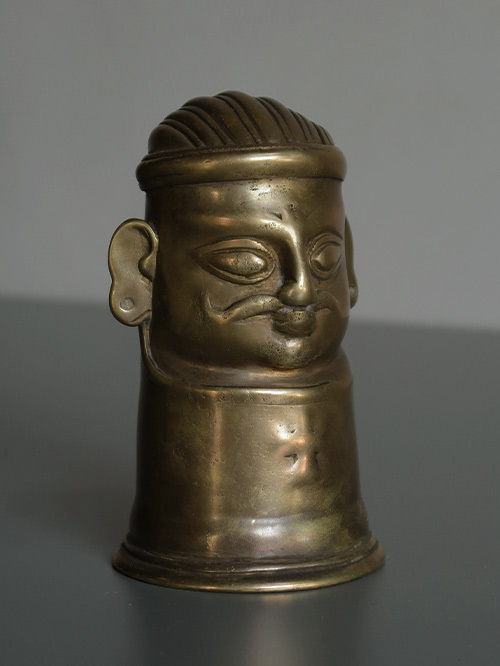
    Shiva is one of the three principal deities of Hinduism. He is labelled the ‘destroyer’ with the Trimurti, Hinduism’s trinity which includes Brahma and Vishnu. While sometimes depicted iconically, he is usually worshipped in the aniconic from of a lingam. The lingam is shaped like a pillar with a round top and can be made of stone, wood or metal. Mukha-linga signifies a visage or face on a metallic, cylindrical casting used to cover a stone lingam. The cover is thought to protect the viewer from the harm that could occur on visualization of the linga, especially one with eyes painted on its surface, which is believed to energize the figure. The metallic visage iconically depicts Shiva, wearing his characteristic moustache, earrings and matted hair.

    Size (cms): 12.5(H) x 6.3(Diam)
    Size (inches): 5(H) x 2.5(Diam)

  • Mukhalingam with Naga

    Mukhalingam with Naga

    Karnataka (South India)

    brass alloy

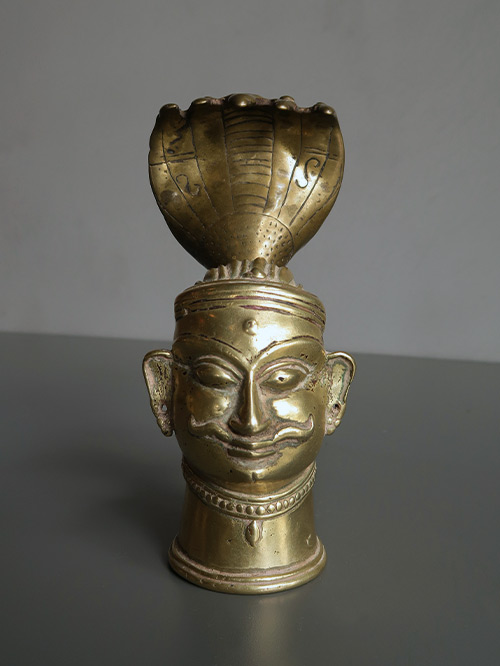
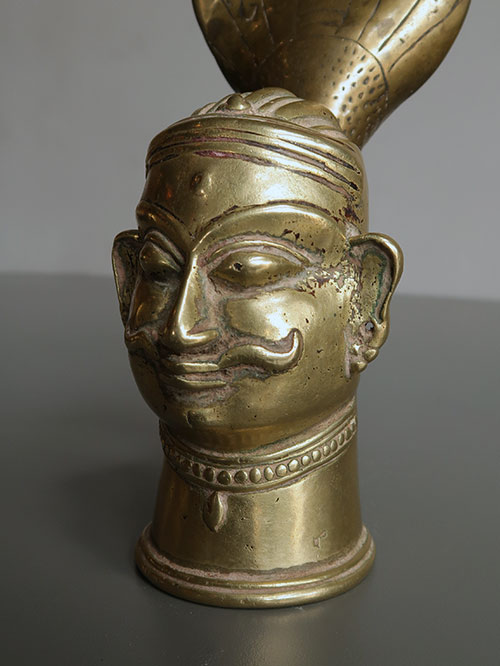
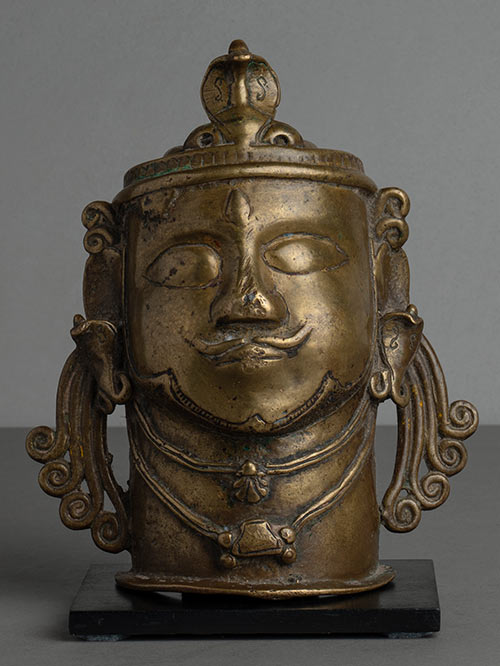
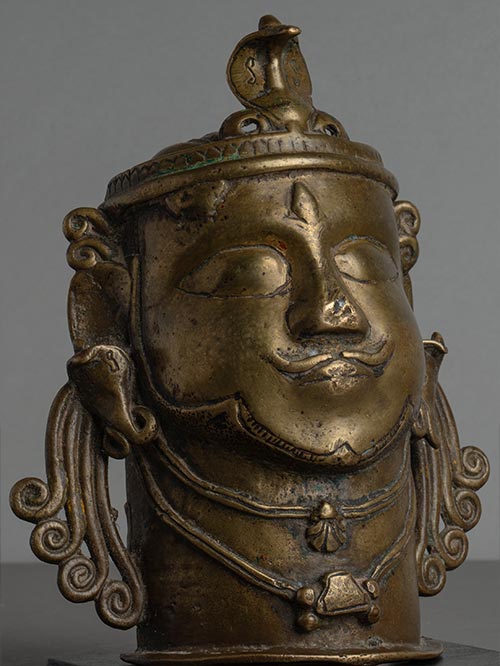
    A finely cast Mukhalingam with a five-headed serpent canopy that extends over the head of the moustached god. Shiva wears a jewelled necklace, a decorated turban and his third eye is prominently displayed on his forehead.

    Shiva is one of the three principal deities of Hinduism. He is labelled the ‘destroyer’ with the Trimurti, Hinduism’s trinity which includes Brahma and Vishnu. While sometimes depicted iconically, he is usually worshipped in the aniconic from of a lingam. The lingam is shaped like a pillar with a round top and can be made of stone, wood or metal. Mukhalinga signifies a visage or face on a metallic, cylindrical casting used to cover a stone lingam. The cover is thought to protect the viewer from the harm that could occur on visualization of the linga, especially one with eyes painted on its surface, which is believed to energize the figure. The metallic visage iconically depicts Shiva, wearing his characteristic moustache, earrings and matted hair.

    Size (cms): 20(H) x 9(W) x 10(D)
    Size (inches): 8(H) x 3.5(W) x 4(D)

  • mukhalingam with nagamukhalingam with naga

    Mukhalingam with Naga

    Karnataka (South India)

    brass

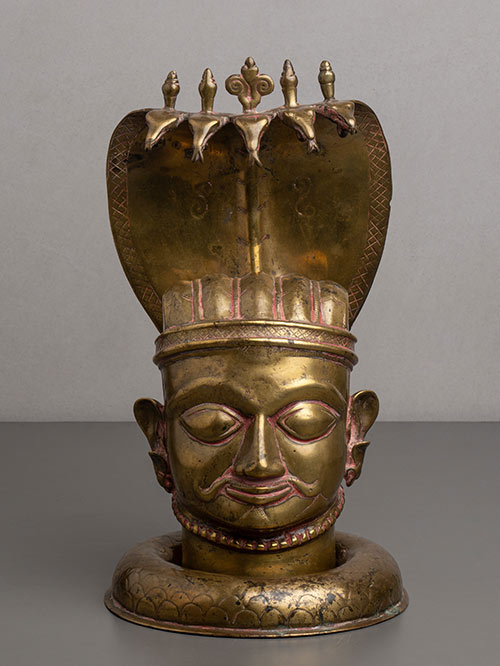
    A finely cast and decorated Mukhalingam, – the moustachioed Shiva wears a simple turban, delicate naga (snake) earrings and a beaded necklace. His head rests on the patterned coils of the serpent Vasuki whose five-headed hood forms a canopy over his head.

    Shiva is one of the three principal deities of Hinduism. He is labelled the ‘destroyer’ with the Trimurti, Hinduism’s trinity which includes Brahma and Vishnu. While sometimes depicted iconically, he is usually worshipped in the aniconic from of a lingam. The lingam is shaped like a pillar with a round top and can be made of stone, wood or metal. Mukha-linga signifies a visage or face on a metallic, cylindrical casting used to cover a stone lingam. The cover is thought to protect the viewer from the harm that could occur on visualization of the linga, especially one with eyes painted on its surface, which is believed to energize the figure. The metallic visage iconically depicts Shiva, wearing his characteristic moustache, earrings and matted hair.

    Size (cms): 30.5(H) x 17(W) x 17(D)
    Size (inches): 12(H) x 6.5(W) x 6.5(D)

  • naga altar ornamentnaga altar ornament

    Naga Altar Ornament

    Maharashtra/ Karnataka

    Brass alloy

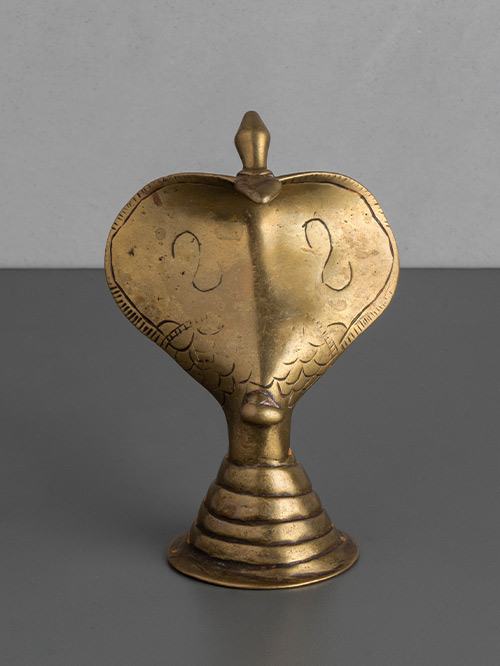
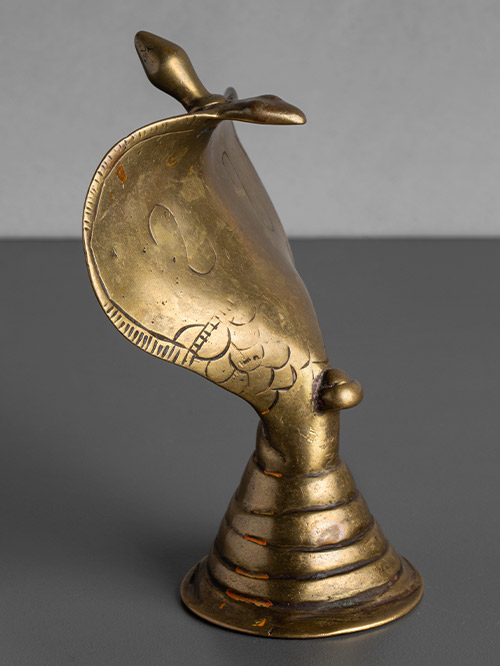
    A decorative cylindrical cover in the shaped of a coiled naga (snake) which may have fit over a lingam (or might have been worshipped in its own right in lieu of a lingam). Many covers have faces (in which case they are called a mukhalinga). Lingam covers are used in puja or prayer rituals and are a visible form of the mantra namah Shivaya through which devotees invoke the blessings of Shiva.

    Shiva is one of the three principal deities of Hinduism. He is labelled the ‘destroyer’ with the Trimurti, Hinduism’s trinity which includes Brahma and Vishnu. While sometimes depicted iconically, he is usually worshipped in the aniconic from of a lingam. The lingam is shaped like a pillar with a round top and can be made of stone, wood or metal.

    Size (cms): 12(H) x 8(W) x 5(D)
    Size (inches):
     4.5(H) x 3(W) x 2(D)

  • ritual vesselritual vessel

    Ritual Vessel

    Orissa

    Brass alloy

    A beautiful patinated tantric ritual vessel with a stupa shaped lid. Symbols related to water and fertility and depicted including rows of grains, two step wells in cruciform shape, sun and moon symbols and five water Goddesses.

    The  Sätiasarā are non-Brahminic river deities or water nymphs worshiped primarily in rural Maharashtra. They have no distinctive mythology, and their cult lacks temples and priests, festivals and places of pilgrimage. They are considered sisters, depicted up to seven in number and are sometimes accompanied by Mhaskoba, their brother. Little is known about their mythology and they are associated with fertility. If angered, they are considered to harm women, mostly related to maternity, and are responsible for infertility, miscarriage or death of infants. To appease them, up to thirty-four different items such as fruits, flowers, small trinkets, and cosmetics, seven at a time, must be placed in seven new baskets and deposited in a waterhole by the river. This vessel was probably used as part of the puja (prayer) ritual to appease the Goddesses.

    Size (cms): 14.5(H) x 11(W) x 11(D)
    Size (inches): 5.5(H) x 4.5(W) x 4.5(D)

  • shiva mukhavatashiva mukhavata

    Shiva Mukhavata

    Karnataka (South India)

    brass

    A finely detailed Mukhavata boasts an attractive shape, colour, and patina. The moustachioed Shiva is adorned with extensive jewellery, including a headband topped by a serpent (naga), and his curled and matted hair splays out from either side of his ears. Shiva’s third eye is prominently visible on his forehead.

    Mukhavata or facial masks are two-dimensional metal castings of the crowned or turbaned heads of various deities, mostly manifestations of Shiva and Parvati. Included in this group are Khandoba, Mallanna, Gauri and their regional variants who are worshipped under different names.

    Shiva is one of the three principal deities of Hinduism. He is labelled the ‘destroyer’ with the Trimurti, Hinduism’s trinity which includes Brahma and Vishnu. While sometimes depicted iconically, he is usually worshipped in the aniconic from of a lingam. The lingam is shaped like a pillar with a round top and can be made of stone, wood or metal. Mukha-linga signifies a visage or face on a metallic, cylindrical casting used to cover a stone lingam. The cover is thought to protect the viewer from the harm that could occur on visualization of the linga, especially one with eyes painted on its surface, which is believed to energize the figure. The metallic visage iconically depicts Shiva, wearing his characteristic moustache, earrings and matted hair.

    Size (cms): 21.5(H) x 16.5(W) x 9.5(D)
    Size (inches): 8.5(H) x 6.5(W) x 3.5(D)

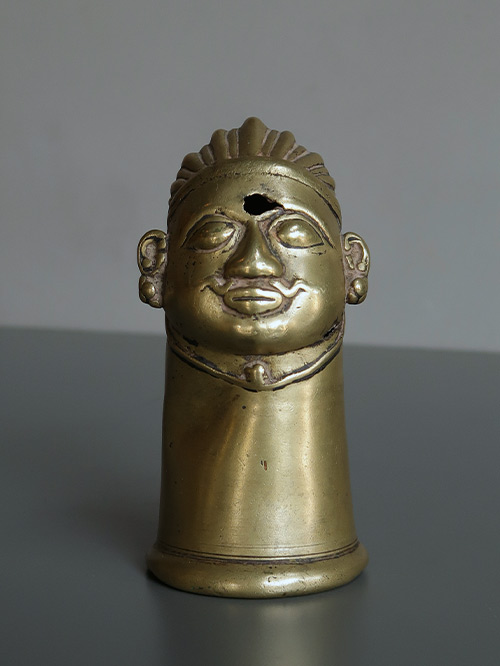
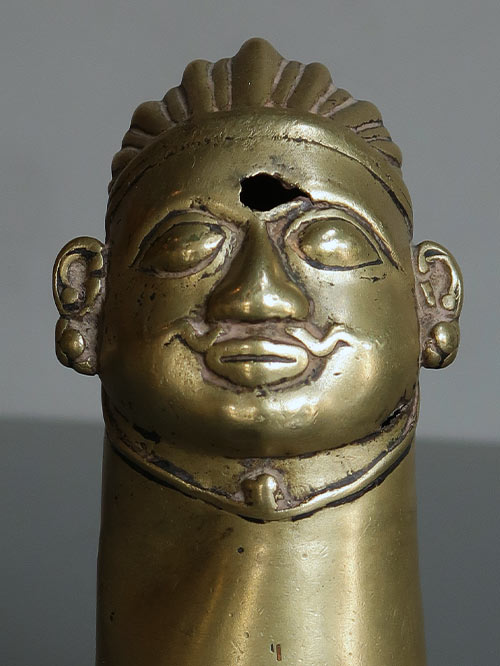
  • Mukhalingam

    Mukhalingam

    Karnataka (South India)

    brass

    Mukha-linga signifies a visage or face on a metallic, cylindrical casting used to cover a stone linga (phallus), which is the phallus symbol of the god Shiva. The linga is made of natural or dressed stone usually in an ovoid configuration. The cover is thought to protect the viewer from the harm that could occur on visualization of the linga, especially one with eyes painted on its surface, which is believed to energize the figure.

    Size(cms): 14 (H) x 7 (Diameter)

    Size(inches): 5.5 (H) x 2.8 (Diameter)

  • Bhairava 'Demon Scarer'

    Bhairava ‘Demon Scarer’

    Northern Karnataka (South India)

    brass

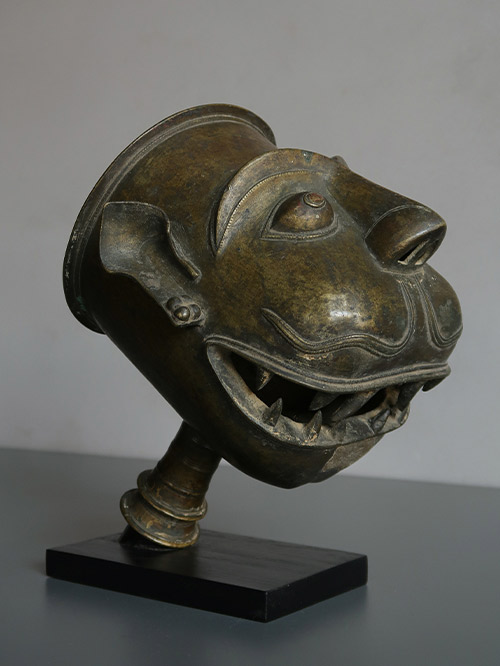
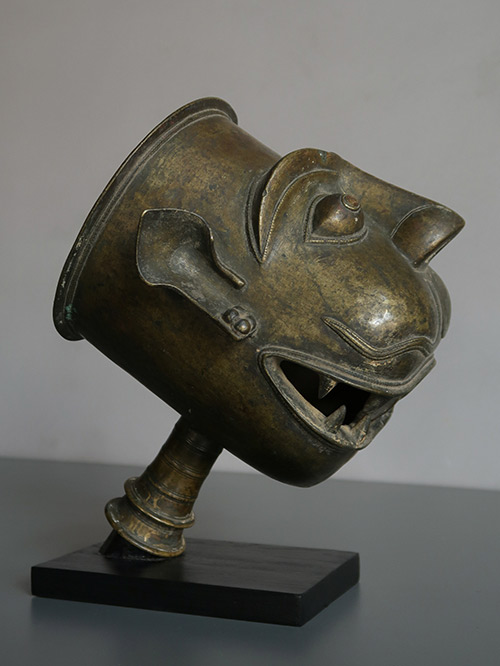
    A monstrous animal like head depicting the demonic form of Bhairava, one of the avatars of Shiva. The moustachioed visage has a vicious face with bulging eyes and cheeks and with a huge gaping mouth with large teeth and fangs. The head has a rounded tubular extension at its base, which would fit over a pole and could be carried above the heads of the populace during festivals and processions.

    Protective deities such as viras (deified heroes),  kshetrapalas (guardians), bhutas (spirits of various deities), including some daivas (devils) were expected to provide protection against invaders, thieves, the elements- fire , storms, floods, drought, disease etc. Since the earth was populated by gods and their counterparts in the nether world, demons, evil spirits and ghosts, prayers, offerings and sacrifices were made to both groups to propitiate them.

    Size (cms): 28(H) x 22(W) x 23.5(D)
    Size (inches):
    11(H) x 8.5(W) x 9.5(D)

  • Bhairava 'Demon Scarer'

    Bhairava ‘Demon Scarer’

    Northern Karnataka (South India)

    brass

    A finely cast small Bhairava head, the ferocious form of Shiva. The head has a rounded tubular extension at its base, which would fit over a pole and could be carried above the heads of the populace during festivals and processions. The fanged visage has bulging eyes and cheeks and with finely cast earrings. A prominent third eye, a symbol of Shiva’s destructive force, is a key identifier. ⁠

    The use of monster figures and monster masks, usually made of bronze, was also used for this purpose. These mostly depicted a demonic form of Bhairava, one of the avatars of Shiva.  They were made with a rounded tubular extension at its base, which would fit over a  pole and could be carried above the heads of the populace during festivals and processions. A moustachioed visage was usually portrayed characterised by a vicious face with bulging eyes and cheeks and with a huge gaping mouth with large teeth and fangs. The forehead of the figure often carried the third eye, a symbol of Shiva’s destructive force, and sometimes also include sectarian marks consisting of three horizontally oriented straight or slightly curved lines. Other masks exhibited a distinct animal-like visage with huge teeth and a gigantic mouth. Those were often referred to as ‘tiger masks’. Some masks assumed the expression of a gargoyle with huge, bulging cheeks. Others incorporated composite features including tusks, bossing of the skull and occasionally the horns of a ram.

    Protective deities such as viras (deified heroes),  kshetrapalas (guardians), bhutas (spirits of various deities),  including some daivas (devils) were expected to provide protection against invaders, thieves, the elements- fire , storms, floods, drought, disease etc. Since the earth was populated by gods and their counterparts in the nether world, demons, evil spirits and ghosts, prayers, offerings and sacrifices were made to both groups to propitiate them.

    Size (cms): 18.5(H) x 15.5(W) x 9(D)
    Size (inches): 7.5(H) x 6(W) x 3.5(D)

  • Demon Scarer

    Demon Scarer

    Karnataka

    brass alloy

    A finely cast Bhairava head also know as a ‘Demon Scarer’. The head has a rounded tubular extension at its base, which would fit over a pole and could be carried above the heads of the populace during festivals and processions. The moustachioed visage has a vicious face with bulging eyes and cheeks and with a huge gaping mouth with large teeth and fangs.

    Such monster figures and monster masks depict a demonic form of Bhairava, one of the avatars of Shiva. Some masks exhibited a distinct animal-like visage with huge teeth and a gigantic mouth. Those were often referred to as ‘tiger masks’. Some masks assumed the expression of a gargoyle with huge, bulging cheeks. Others incorporated composite features including tusks, bossing of the skull and occasionally the horns of a ram.

    Protective deities such as viras (deified heroes),  kshetrapalas (guardians), bhutas (spirits of various deities), including some daivas (devils) were expected to provide protection against invaders, thieves, the elements- fire , storms, floods, drought, disease etc. Since the earth was populated by gods and their counterparts in the nether world, demons, evil spirits and ghosts, prayers, offerings and sacrifices were made to both groups to propitiate them.

    Size (cms): 28(H) x 24(W) x 16(D)
    Size (inches): 11(H) x 9.5(W) x 6.5(D)

  • Pair of Demon Scarers

    Pair of Demon Scarers

    Karnataka

    brass alloy

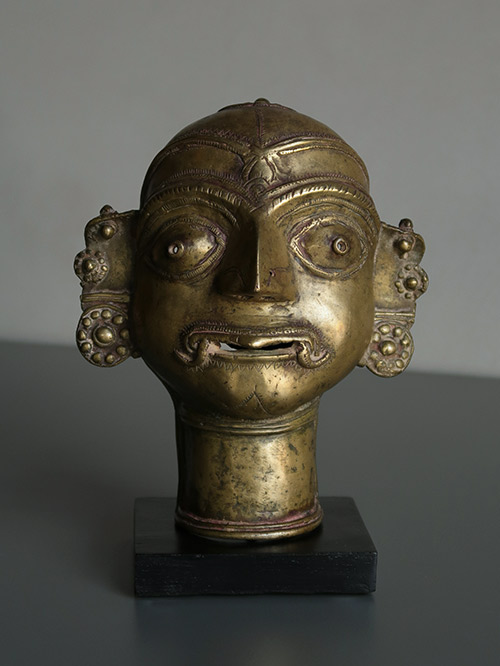
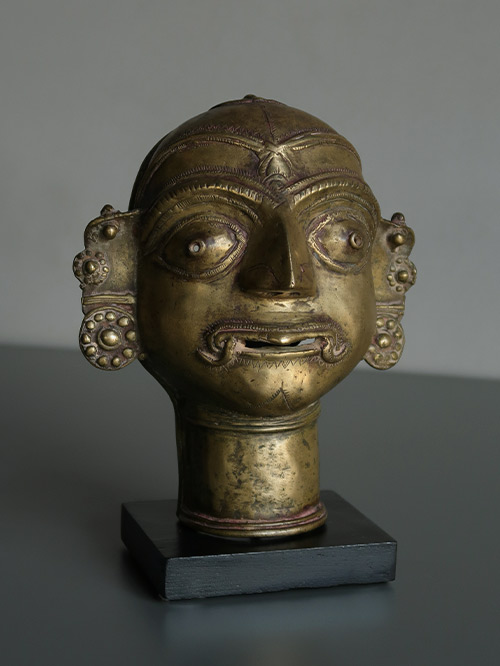
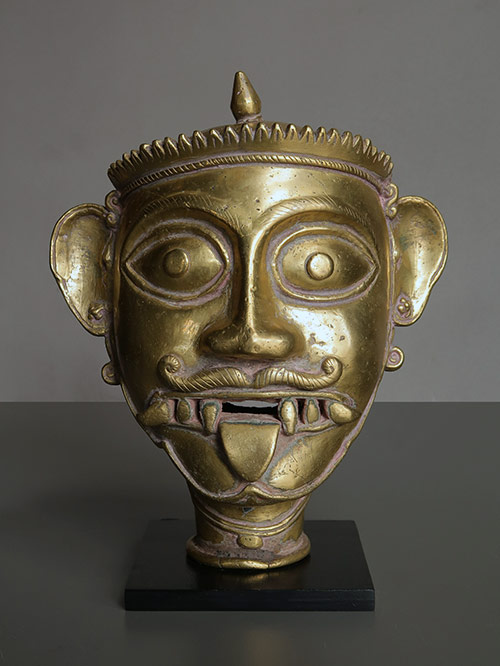
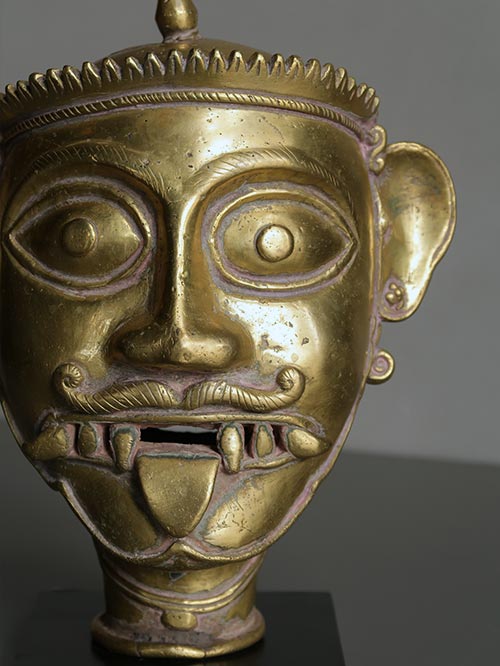
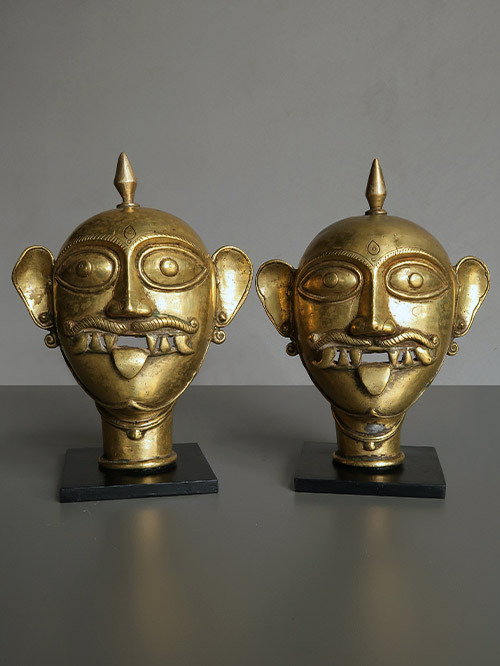
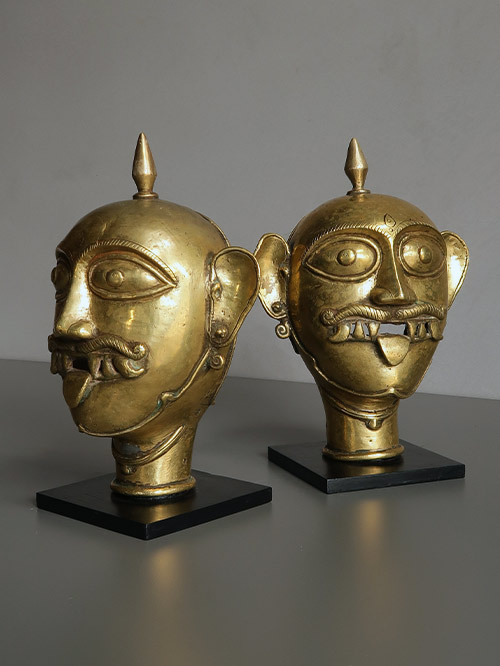
    A beautiful pair of brass cast Bhairava heads also know as a ‘Demon Scarers’. Both visages are moustachioed with vicious gaping mouths with large teeth, fangs and protruding tongues. The heads have a rounded tubular extension at their base, which would fit over a pole and could be carried above the heads of the populace during festivals and processions.

    Such monster figures and monster masks depict a demonic form of Bhairava, one of the avatars of Shiva. Some masks exhibited a distinct animal-like visage with huge teeth and a gigantic mouth. Those were often referred to as ‘tiger masks’. Some masks assumed the expression of a gargoyle with huge, bulging cheeks. Others incorporated composite features including tusks, bossing of the skull and occasionally the horns of a ram.

    Protective deities such as viras (deified heroes),  kshetrapalas (guardians), bhutas (spirits of various deities), including some daivas (devils) were expected to provide protection against invaders, thieves, the elements- fire , storms, floods, drought, disease etc. Since the earth was populated by gods and their counterparts in the nether world, demons, evil spirits and ghosts, prayers, offerings and sacrifices were made to both groups to propitiate them.

    Size (cms): 29(H) x 23(W) x 15(D) each
    Size (inches): 11.5(H) x 9(W) x 6(D) each

Phillips Antiques

PHILLIPS

Subscribe to our Newsletter to stay updated with newest arrivals.
SUBSCRIBE NOW
close-link